
Home / Reptiles / Lizards / Chamaeleonidae / Parson's chameleon
Some federal rules applyParson's chameleon
Calumma parsonii
Reptiles › Lizards (Lacertilia) › Chamaeleonidae (Chameleons)
Care at a glance
Setup
One answer per setting. Where sources differ, the smaller figure is the minimum and the larger is what we recommend.
| Adult enclosure | At least 4x2x4 feet Preferably 6x3x6 feet Their massive size and arboreal lifestyle demand enormous enclosures. | furrycritter.com |
| Hot spot | At least 82°F Preferably 88°F To provide proper thermal gradients. | furrycritter.com |
| Warm side | At least 70°F Preferably 78°F They require cooler conditions than most chameleons. | furrycritter.com |
| Cool side | At least 70°F Preferably 78°F Parson's require cool ambient conditions. | furrycritter.com |
| Night temperature | At least 60°F Preferably 68°F Maintains a safe nighttime drop in ambient temperature. | furrycritter.com |
| Humidity | At least 70% Preferably 85% Proper humidity cycling prevents respiratory disease and helps shedding. | furrycritter.com |
| UVB | At least 5.0 Preferably 10.0 High-output T5 linear tubes provide proper UVB coverage. | furrycritter.com |
| Housing | At least 1.2 x 0.6 x 1.2 meters Preferably 4 x 2 x 4 feet Adequate minimum size for an adult with larger cages being best. | reptiletalk.net |
Care guide
By age
| Baby | Enclosure: Baby cage lighting consists of one Reptisun 5.0 and one 6500k flourecent bulb. | reptiletalk.net |
| Juvenile | Enclosure: Juveniles can temporarily live in smaller spaces (24x24x48 inches), but rapid growth necessitates adult housing by 12-18 months. | furrycritter.com |
- Discolorations along the teeth and gum lines: Indication of mouth disease known as Stomatitis which can spread into the jaw bone. reptiletalk.net
- Redness on the pads of their feet: Can develop into open sores if not addressed, often caused by wet perches or improper branch size. reptiletalk.net
Understanding the animal
Localities
Localities
Keepers buy these by where the bloodline comes from. Care is basically the same; size, color and temperament can differ. “Breeder-reported” details still need a published source.
In the wild
In the wild
Researched for this exact species, not its family. Wild conditions are context, not enclosure settings.123
| Where it lives | Parson's chameleon is endemic to eastern and northern Madagascar, mainly inhabiting humid primary forest from lowlands up to 1,195 meters altitude. |
| Active | The species is a sit-and-wait predator that tends to be slow-moving and quite inactive, though it is more active during breeding season. |
| Social life | Females can retain sperm in their oviduct for a significant period after mating to fertilize multiple clutches over several years. |
| Wild diet | Parson's chameleon mainly feeds on invertebrates, especially insects, but it is opportunistic and sometimes takes small vertebrates like lizards and birds. |
| Behavior to plan for | Breeding is seasonal with mating at the start of the rainy season and egg-laying at the end of the rainy season. |
Profile
Profile
Researched for this exact species. Sources are listed under In the wild above.
Keeper tips
- Parson's chameleons exhibit stress colors and patterns when uncomfortable and should not be handled when this is evident.
- Parson's chameleons are extraordinarily massive and delicate animals, but pose no venom or size danger to keepers.
Remarkable facts
- In captivity, individuals have been recorded living up to 14 years, and potentially reaching as much as 20 years.
Data and studies
Veterinary & husbandry research
Veterinary & husbandry research
- Longevity in Calumma parsonii, the World's largest chameleon. et al., Experimental gerontology 2017
- Phylogenetic Reclassification of Metarhizium granulomatis and Metarhizium viride Species Complex. et al., Pathogens (Basel, Switzerland) 2025
- Morphological and biological study of Rhabdias spp. (Nematoda) from African chameleons with description of a new species. et al., Parasite (Paris, France) 2004
Peer-reviewed papers that mention this species alongside captivity, zoos, veterinary care or aquaculture. Some cover several species or mention it only in passing, so check the abstract. PubMed
Sources for this sheet
- Species+ (UNEP-WCMC and the CITES Secretariat) Zoo, university or veterinaryThe official database of species listed under CITES. UNEP (2026). The Species+ Website. Nairobi, Kenya. Compiled by UNEP-WCMC, Cambridge, UK. Available at: www.speciesplus.net. [Accessed 04/10/2026].
- USFWS International Affairs: CITES Zoo, university or veterinaryFederal agency that issues CITES permits.
- Parson s chameleon (furrycritter.com) Experienced keeper or breederKeeper care guide.
- Parsons chameleon (reptiletalk.net) Experienced keeper or breederKeeper care guide.
- Wikipedia: Calumma parsonii (CC BY-SA 4.0) Community referenceEncyclopedia article.
- The Reptile Database: Calumma parsonii Zoo, university or veterinaryTaxonomy, distribution and literature for every reptile species.
- Calumma parsonii cristifer (madcham.de) Experienced keeper or breederKeeper care guide.
- The Reptile Database Peer-reviewed researchScientist-curated catalog of every reptile species, with taxonomy and literature.
- GBIF Backbone Taxonomy (Global Biodiversity Information Facility) (CC BY 4.0) Peer-reviewed researchInternational scientific taxonomy used here for classification. GBIF Secretariat (2023). GBIF Backbone Taxonomy. Checklist dataset https://doi.org/10.15468/39omei, accessed via GBIF.org.
- PubMed (U.S. National Library of Medicine) Peer-reviewed researchIndex of peer-reviewed veterinary, zoo and husbandry research.
More chameleons
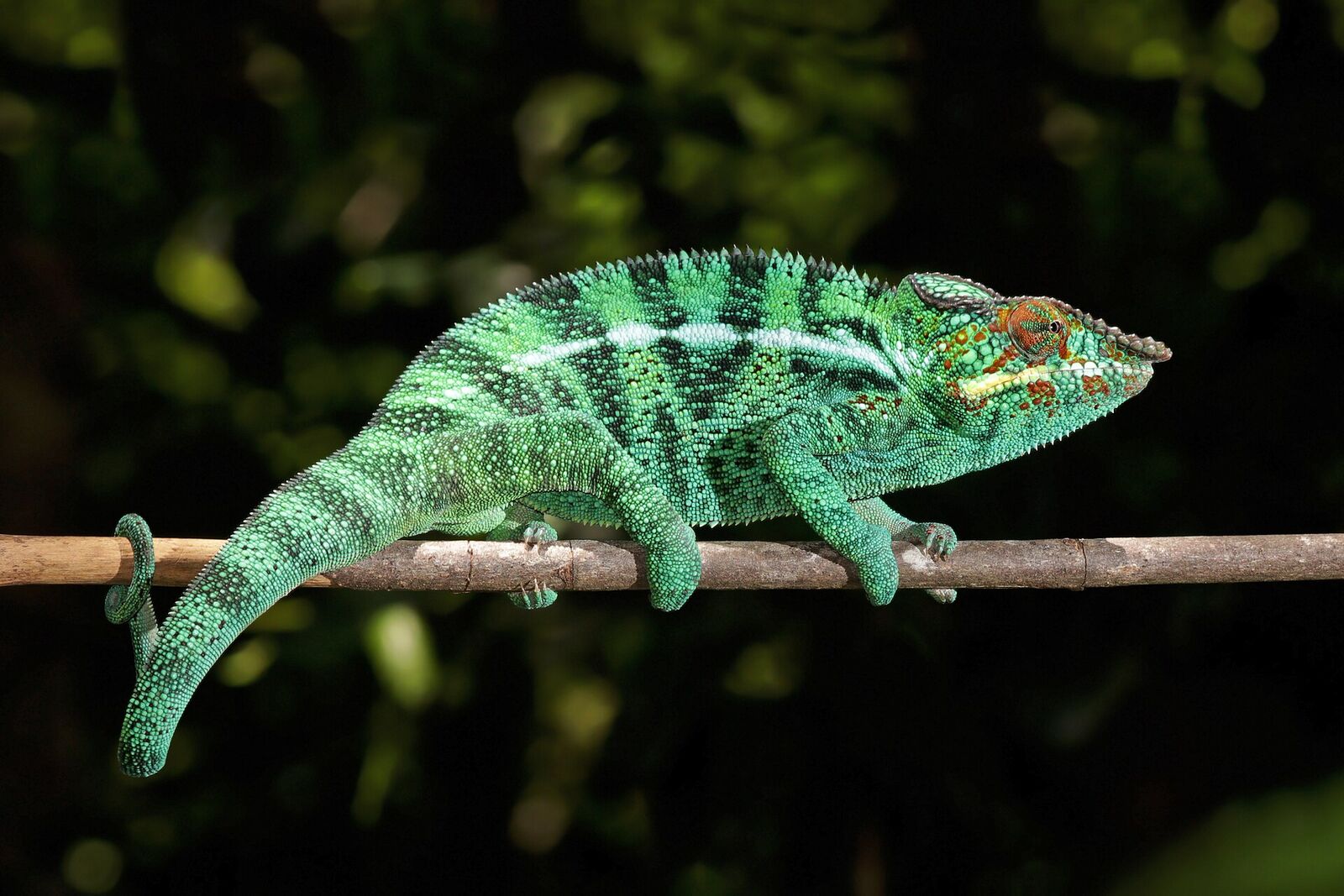
Panther chameleon
Furcifer pardalis
The most colorful chameleon of all.
Pet trade
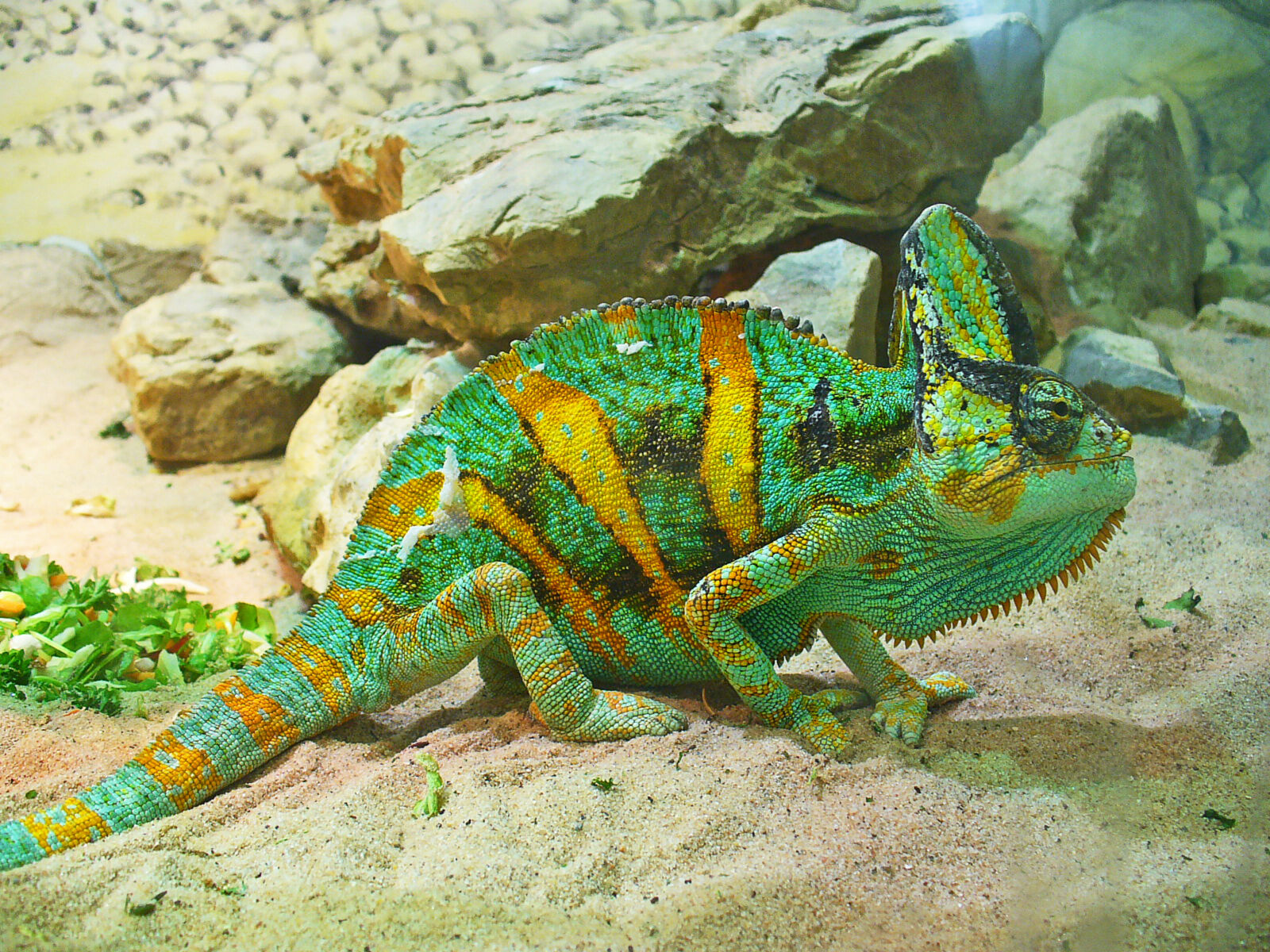
Veiled chameleon
Chamaeleo calyptratus
Color-shifting, independent, look-don't-touch.
Pet trade

Bearded pygmy chameleon
Rieppeleon brevicaudatus
Pet trade

Cape dwarf chameleon
Bradypodion pumilum
Pet trade

Carpet chameleon
Furcifer lateralis
Pet trade

Common chameleon
Chamaeleo chamaeleon
Zoos & aquariums