Home / Reptiles / Lizards / Sandfish skink
No federal permit to keepSandfish skink
Scincus scincus
Reptiles › Lizards (Lacertilia) › Scincidae (Skinks)
Scincus scincus, also commonly known as the sandfish skink, common sandfish or common skink, is a species of skink notable for its burrowing or swimming behaviour in sand.

Care at a glance
Species-specific values
Values researched for this exact species. Where they differ from the group guide below, follow these. Air, surface and water temperatures are listed separately, and each source is kept as published rather than averaged.
| Basking sand surface temperature | 130–140 °F Sandfish care regime; not ambient air. | 230 |
| Cool substrate surface temperature | 80–90 °F Source emphasizes IR sand-surface readings. | 230 |
| Night temperature | 70–80 °F Measurement type not explicit. | 230 |
| Moisture microhabitat | Predominantly dry sand with a localized damp refuge below the surface and a shallow water dish. | 230 |
Care guide
Small and mid-sized skinks
Applies to most species in this group. Habitat: Forest floor, grassland and sand. Individual species can differ, so compare with the species numbers above and the linked sources.
Housing & setup
- Deep, moisture-holding substrate for fire skinks and crocodile skinks; loose sand for sandfish.
- Hides and leaf litter; most are shy.
Climate & lighting
Starting point only: Fire skinks and desert sandfish need very different heat and moisture regimes. Check the species-specific values for this animal where shown.
| Basking spot | 90–95°F |
| Warm side / daytime | 80–85°F |
| Cool side | 70–75°F |
| Humidity | 60–80% |
- UVB: Recommended.
Diet
- Insects and worms; some take fruit.
Health watch
- Crocodile skinks are fragile and humidity-dependent; fire skinks are hardy if kept humid.
Understanding the animal
About this animal
About this animal
It is native to the Sahara Desert and the Arabian Peninsula, but is also kept as a pet elsewhere.
Quoted from the Wikipedia article “Scincus scincus” (CC BY-SA 4.0) 174
In the wild
In the wild
Researched for this exact species, not its family. Good care copies these conditions.123456
| Where it lives | A sand specialist of North African Saharan deserts, including dunes at El-Oued in southeastern Algeria. It spends much of its life just beneath loose dune sand, emerging briefly to forage. |
| Ground it lives on | loose, fine desert sand |
| Climate | Very arid, with hot days and large daily temperature changes; reliable species-specific field temperature and relative-humidity ranges were not established. |
| Active | Diurnal; heat-related aestivation is reported, but field timing is poorly documented. |
| Social life | Usually encountered individually; territoriality is insufficiently documented. |
| Wild diet | Primarily insects; an Algerian field study found beetles most prominent, followed by hymenopterans such as ants. |
| Behavior to plan for | It folds its limbs against its body and swims through sand by undulating; burial provides escape and thermal refuge. |
What this means for care
- Provide deep loose sand for swimming and burial.
- Heat from above so deeper sand remains a cooler refuge.
- Offer varied small insect prey rather than a herbivorous skink diet.
Native climate (measured)
Native climate (measured)
| Warm-season highs | about 92°F (up to 104°F in the hottest sampled areas) |
| Cool-season lows | about 43°F (down to 42°F in the coldest sampled areas) |
| Average temperature | 67–75°F across sampled records |
| Relative humidity | 52–54% on average (driest month about 45%) |
| Rainfall | about 142 mm a year, with strong wet and dry seasons |
Measured at 58 wild occurrence records sampled against WorldClim 2.1 climate data (1970–2000 averages). Air conditions in the range are ecological context, not enclosure settings: microhabitats such as burrows, leaf litter or basking rocks can be cooler, warmer or more humid.
Profile
Profile
Researched for this exact species. Sources are listed under In the wild above.
History
Scincus scincus has an important nomenclatural history because Scincus is the type genus of Scincidae. The Reptile Database notes that several former subspecies have since been elevated to full species.
Keeper tips
- Provide loose sand that permits complete burial.
- Allow the animal to spend long periods hidden beneath the substrate.
- Keep vegetation sparse if recreating the wild habitat described.
- Do not treat prolonged burial as abnormal on its own, because the species naturally spends most of its life beneath sand.
- Do not invent exact temperature or humidity targets from these sources; none are supplied.
Behaviors reported
- Moves through sand in a swimming-like manner.
- Usually remains about 1-3 cm beneath the surface.
- Dives into sand to avoid desert heat.
- Uses burial to escape predators.
- Emerges principally to feed, excrete and reproduce.
Unique adaptations
- A long wedge-shaped snout assists movement through sand.
- The compact tapered body is covered in smooth, shiny scales.
- The limbs are short and sturdy.
- Specialized structures on the belly allow it to breathe while submerged in sand.
- Its sand-swimming movements produce vibrations reported at a consistent frequency of about 3 Hz.
Remarkable facts
- Adults usually reach about 20 cm total length according to the supplied Wikipedia source.
- It is native to the Sahara Desert and Arabian Peninsula.
- Animal Diversity Web states that it spends most of its life beneath desert sand.
- The Reptile Database states that Scincus scincus is not present in Morocco.
- Several forms once treated as subspecies, including albifasciatus, laterimaculatus and conirostris, are now considered valid species by the Reptile Database.
From the sources
From the sources
Quoted from the matching sections of reputable sources for this exact species. Specialist databases are used first; Wikipedia (community-edited, CC BY-SA 4.0) only fills gaps. Other sources are short credited quotes.
| Overview | Scincus scincus, also commonly known as the sandfish skink, common sandfish or common skink, is a species of skink notable for its burrowing or swimming behaviour in sand. It is native to the Sahara Desert and the Arabian Peninsula, but is also kept as a pet elsewhere. — Wikipedia (community-edited) |
| Where it lives | Sandfish skinks spend most of their lives burrowed beneath desert sand, only emerging to eat, excrete waste, and reproduce. — Animal Diversity Web |
| Social life and communication | Sandfish skinks are sand specialists and spend most of their time underneath the sand. — Animal Diversity Web |
| Wild diet | Sandfish skinks are insectivores. — Animal Diversity Web |
| Behavior | One of the most studied and interesting behaviors of sandfish skinks is their ability to maneuver through sand as if it were swimming. — Animal Diversity Web |
| Reproduction | The mating system of sandfish skinks is unknown. — Animal Diversity Web |
| Lifespan | The exact lifespan of sandfish skinks is relatively under-investigated. — Animal Diversity Web |
| Appearance and size | Diagnosis (genus): Heavy limbs with robust pes, expanded lamellae on digits and phalanges, short-tailed. Conical head, convex in lateral view, parietal bone with clear lateral indentations and supratemporal fontanelle open. Sexual dimorphism in head proportions not distinct. — The Reptile Database |
| History and naming | Named after Latin scincus, and this from Greek σκίγκος, skink, a kind of lizard found in Africa and the East, used in medicine. [".Corpus officinale pro aphrodisiaco…"]. — The Reptile Database |
Data and studies
The numbers
The numbers
Each bar is what one source reports. Where several sources weigh in, the dashed gold band marks their average.
Typical adult weight
Average adult body mass in each database (FishBase gives the maximum recorded weight).
Incubation
Sources for this sheet
- Myhrvold et al. (2015). An amniote life-history database. Ecology 96: 3109 Peer-reviewed researchPeer-reviewed compilation of life-history data for over 21,000 birds, mammals and reptiles.
- Merck Veterinary Manual: Management and husbandry of reptiles Zoo, university or veterinaryThe Merck Veterinary Manual: a standard veterinary reference written and reviewed by veterinary specialists.
- Merck Veterinary Manual: Nutritional, metabolic and endocrine diseases of reptiles Zoo, university or veterinaryThe Merck Veterinary Manual: a standard veterinary reference written and reviewed by veterinary specialists.
- ReptiFiles: Fire skink care sheet Zoo, university or veterinaryAdded in the 2026 source-checked care-guide review.
- ReptiFiles: Sandfish temperature, UVB and humidity Zoo, university or veterinaryAdded in the 2026 source-checked care-guide review.
- Clint's Reptiles (YouTube): Sandfish Skink, The Best Pet Lizard? Expert educator & keeperClint Laidlaw, PhD in Biology Education and MS in Evolutionary Ecology; owner of Clint's Reptile Room and a longtime keeper. His "Best Pet?" series reviews each species' care in depth.
- The Reptile Database Peer-reviewed researchScientist-curated catalog of every reptile species, with taxonomy and literature.
- GBIF Backbone Taxonomy (Global Biodiversity Information Facility) Peer-reviewed researchInternational scientific taxonomy used here for classification.
- Species+ (UNEP-WCMC and the CITES Secretariat) Zoo, university or veterinaryThe official database of species listed under CITES.
- Wikipedia (species article) Community referenceFree encyclopedia; useful overviews with their own citations. Intro text is quoted under CC BY-SA 4.0.
- iNaturalist (captive observations) Community referenceCommunity observation platform run by the California Academy of Sciences and National Geographic; observations marked captive show animals living in homes, zoos and aquariums.
More skinks
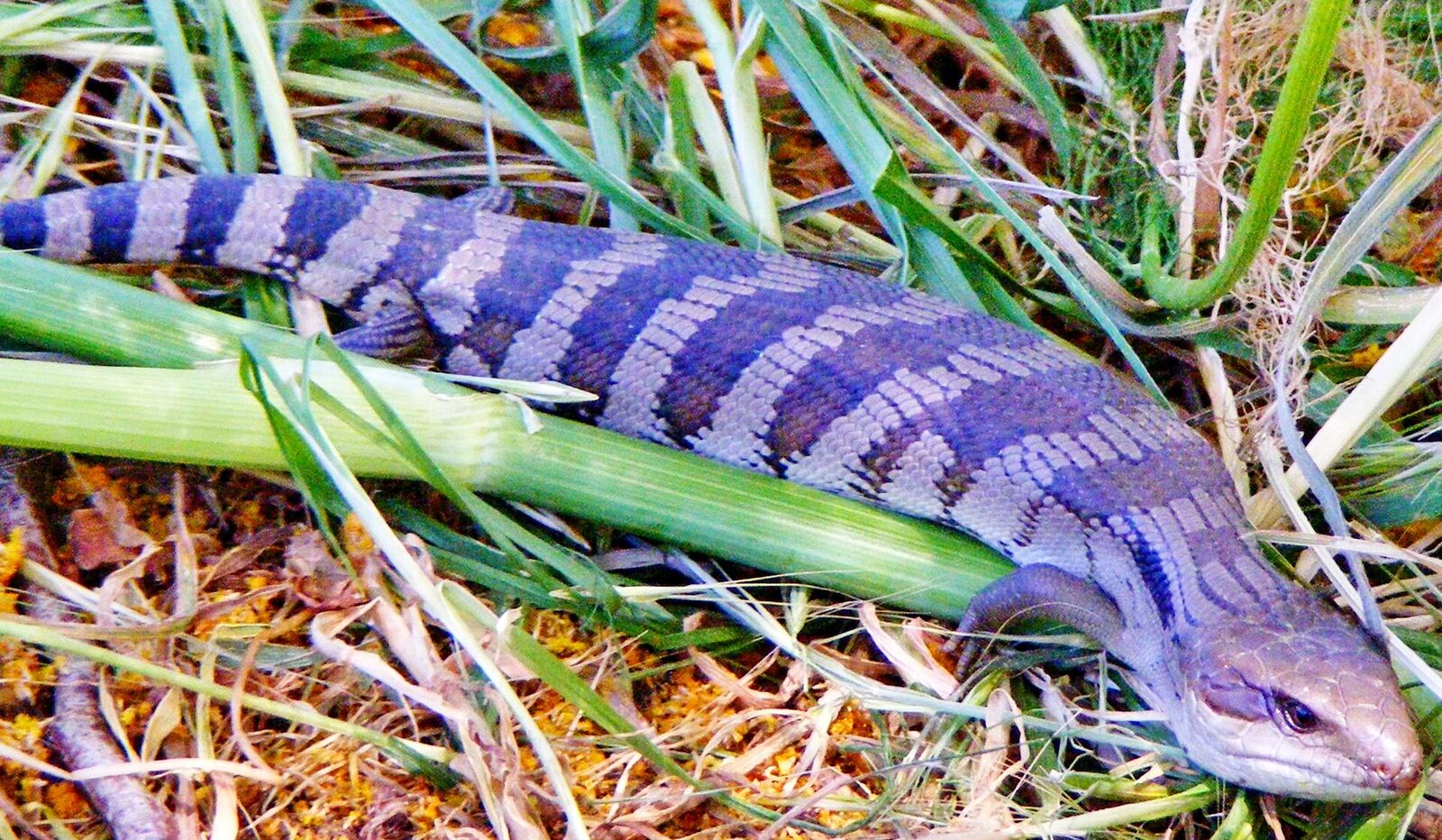 In-depth
Common blue-tongued skink
Tiliqua scincoides
Docile, chunky and flashes a blue tongue.
Pet trade

Blotched blue-tongued skink
Tiliqua nigrolutea
Pet trade

Centralian blue-tongued skink
Tiliqua multifasciata
Pet trade
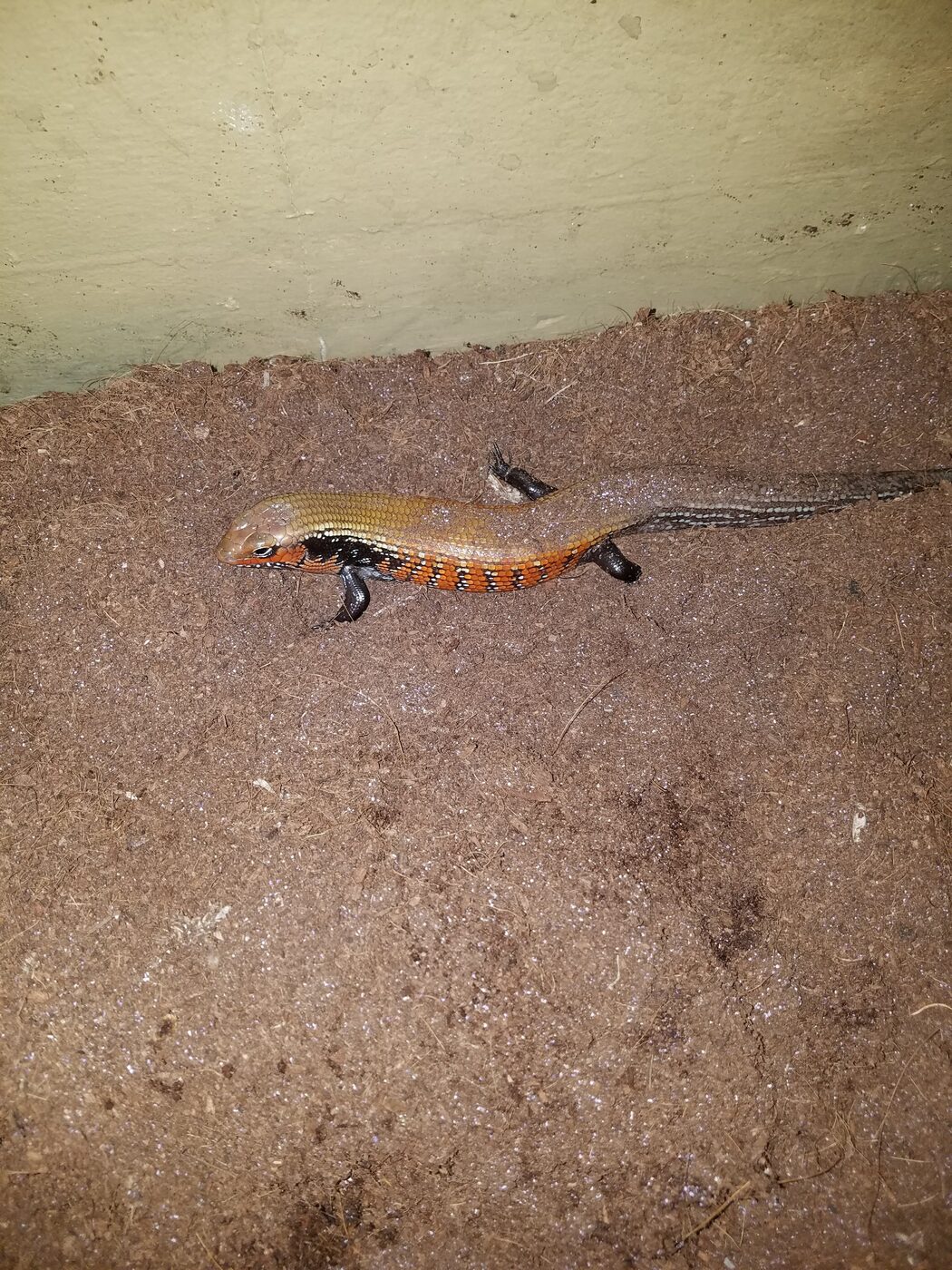
Fire skink
Lepidothyris fernandi
Pet trade

Indonesian blue-tongued skink
Tiliqua gigas
Pet trade

Shingleback skink
Tiliqua rugosa
Pet trade