
Home / Birds / Parrots / Sula hanging-parrot
Some federal rules applySula hanging-parrot
Loriculus sclateri
Birds › Parrots (Psittaciformes) › Psittaculidae (Old World parrots, lorikeets and lovebirds)
The Sula hanging parrot (Loriculus sclateri) is a small species of parrot in the family Psittaculidae.
From Wikipedia: Sula hanging parrot, CC BY-SA 4.0 (excerpt)

Care at a glance
Species-specific values
Values researched for this exact species. Air, surface and water temperatures are listed separately, and each source is kept as published rather than averaged.
| Minimum enclosure | Provide an outdoor planted aviary or a very spacious indoor enclosure with room to fly. Source: parrots.org | |
| Diet | Mainly fruit, vegetables, lory formula, and a small seed mix; provide specified foods when rearing young. Source: parrots.org | |
| Diet | Provide lory nectar, plenty of fruit and vegetables, a good quality seed mix, and soft foods during rearing season. Source: beautyofbirds.com | |
| Social housing | They do fine in a colony environment with other hanging parrots. Source: beautyofbirds.com | |
| Minimum enclosure | Ideally, keep them in a well-planted aviary at least 6 x 3 x 6 ft (2 x 1 x 2m). Source: beautyofbirds.com | |
| Night temperature | at least 59 °F Source: beautyofbirds.com | |
| Night temperature | at least 70 °F Source: beautyofbirds.com |
Understanding the animal
About this animal
About this animal
It is endemic to forest and nearby habitats on the Banggai and Sula Islands in Indonesia.
From Wikipedia: Sula hanging parrot, CC BY-SA 4.0 (excerpt)
In the wild
In the wild
| Overview | The Sula hanging parrot (Loriculus sclateri) is a small species of parrot in the family Psittaculidae. It is endemic to forest and nearby habitats on the Banggai and Sula Islands in Indonesia. — From Wikipedia: Sula hanging parrot, CC BY-SA 4.0 (excerpt) |
| Where it lives | The Sula hanging parrot is found throughout the Sula Islands, Banggi Island, Peleng, Melilis Island, Labobo Island, Seho Island, and other small surrounding islands. However, it is absent from Bengkulu Island and Sulawesi. — From Wikipedia: Sula hanging parrot, CC BY-SA 4.0 (excerpt) |
| History and naming | The Sula hanging parrot has sometimes been treated as a subspecies of the Moluccan hanging parrot, but the two are increasingly treated as separate species based on their distinct differences in plumage and size (14 cm for the Sula hanging parrot versus 11 cm for the Moluccan hanging parrot). — From Wikipedia: Sula hanging parrot, CC BY-SA 4.0 (excerpt) |
| Conservation | Like most other birds in the genus Loriculus, the Sulu hanging parrot is threatened by deforestation to make way for farms, mining operations, and logging. It is also threatened by the illegal pet wildlife trade. — From Wikipedia: Sula hanging parrot, CC BY-SA 4.0 (excerpt) |
Native climate (measured)
Native climate (measured)
| Warm-season highs | about 89°F (up to 89°F in the hottest sampled areas) |
| Cool-season lows | about 72°F (down to 69°F in the coldest sampled areas) |
| Average temperature | 78–81°F across sampled records |
| Relative humidity | 79–80% on average (driest month about 77%) |
| Rainfall | about 2014 mm a year, spread fairly evenly |
Measured at 11 wild occurrence records sampled against WorldClim 2.1 climate data (1970–2000 averages). Air conditions in the range are ecological context, not enclosure settings: microhabitats such as burrows, leaf litter or basking rocks can be cooler, warmer or more humid.
Profile
Profile
Researched for this exact species. Sources are listed under In the wild above.
History
The Sula hanging parrot has sometimes been treated as a subspecies of the Moluccan hanging parrot, but the two are increasingly treated as separate species based on their distinct differences in plumage and size (14 cm for the Sula hanging parrot versus 11 cm for the Moluccan hanging parrot).
From Wikipedia: Sula hanging parrot, CC BY-SA 4.0 (excerpt)
Sources for this sheet
- Species+ (UNEP-WCMC and the CITES Secretariat) Zoo, university or veterinaryThe official database of species listed under CITES. UNEP (2026). The Species+ Website. Nairobi, Kenya. Compiled by UNEP-WCMC, Cambridge, UK. Available at: www.speciesplus.net. [Accessed 04/10/2026].
- USFWS International Affairs: CITES Zoo, university or veterinaryFederal agency that issues CITES permits.
- 9 CFR 2.1: Animal Welfare Act licensing (USDA) Zoo, university or veterinaryWho needs a USDA license to breed, sell or exhibit animals.
- GBIF Backbone Taxonomy (Global Biodiversity Information Facility) (CC BY 4.0) Peer-reviewed researchInternational scientific taxonomy used here for classification. GBIF Secretariat (2023). GBIF Backbone Taxonomy. Checklist dataset https://doi.org/10.15468/39omei, accessed via GBIF.org.
- Wikipedia (species article) (CC BY-SA 4.0) Community referenceFree encyclopedia; useful overviews with their own citations. Short excerpts are quoted under CC BY-SA 4.0, each credited with a link to its article.
- The eBird/Clements Checklist of Birds of the World (Cornell Lab of Ornithology) Peer-reviewed researchThe standard global bird checklist maintained by the Cornell Lab of Ornithology; used here for complete species lists of widely kept bird families.
More old world parrots, lorikeets and lovebirds
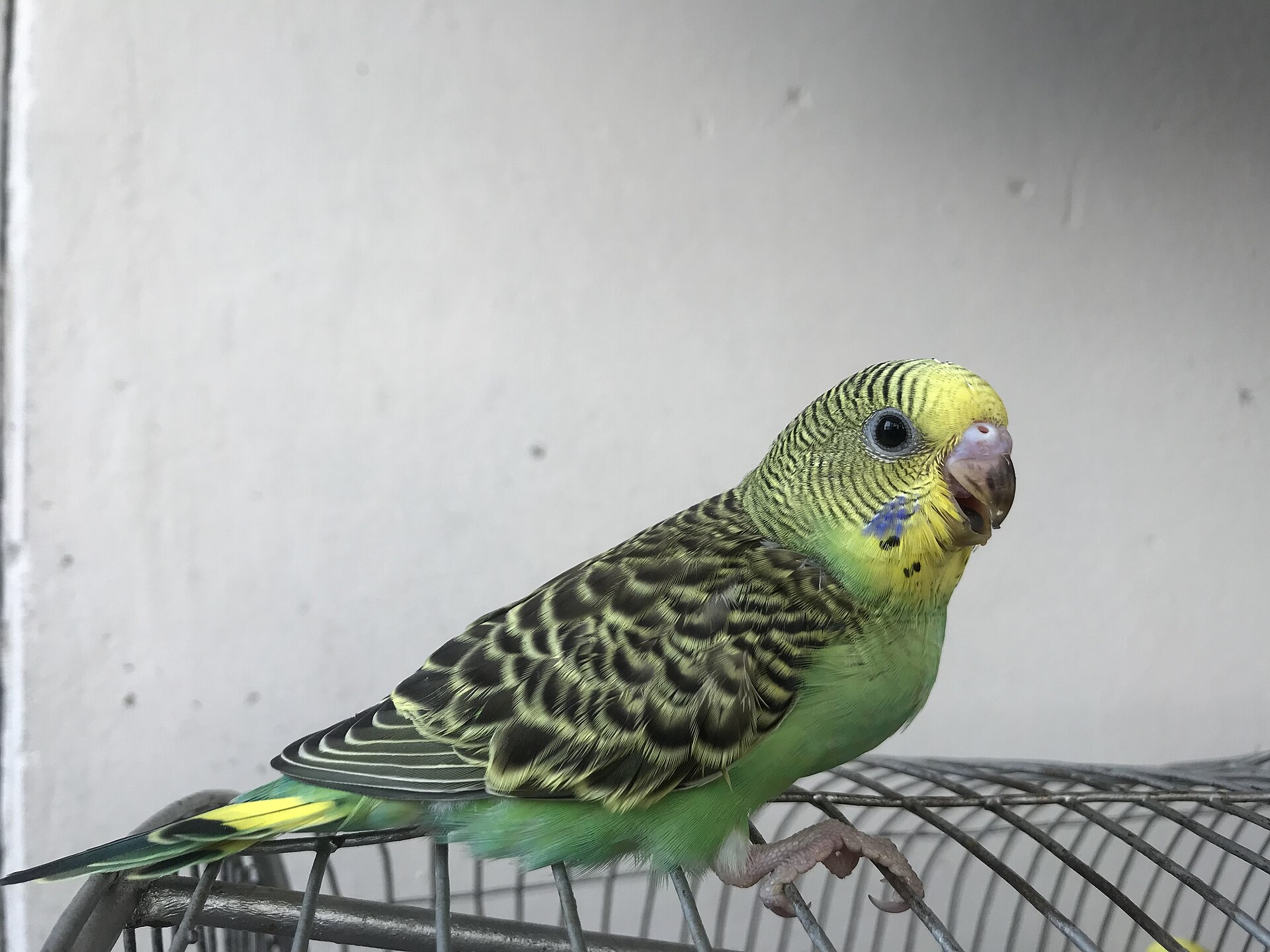
Budgerigar
Melopsittacus undulatus
A small parrot with a big vocabulary.
Pet trade

Alexandrine parakeet
Psittacula eupatria
Pet trade

Black-capped lory
Lorius lory
Pet trade

Black-cheeked lovebird
Agapornis nigrigenis
Pet trade

Blue lorikeet
Vini peruviana
Zoos & aquariums

Blue-crowned hanging parrot
Loriculus galgulus
Zoos & aquariums