
Home / Reptiles / Snakes / Pythonidae / Timor python
Some federal rules applyTimor python
Malayopython timoriensis
Reptiles › Snakes (Serpentes) › Pythonidae (Pythons)
The Timor python (Malayopython timoriensis) is a Malayopython species native to Southeast Asia.
From Wikipedia: Timor python, CC BY-SA 4.0 (excerpt)

Care at a glance
Species-specific values
Values researched for this exact species. Air, surface and water temperatures are listed separately, and each source is kept as published rather than averaged.
| Minimum enclosure | Recommended adult minimum for one animal up to about 94.488″ (240 cm) total length is 94.5″ × 39.4″ × 94.5″ (240 × 100 × 240 cm), L × D × H. Source: thecreaturecorner.com | |
| Basking surface temperature | up to 84.2 °F Source: thecreaturecorner.com | |
| Warm side air temperature | up to 84.2 °F Source: thecreaturecorner.com | |
| Cool side air temperature | up to 78.8 °F Source: thecreaturecorner.com | |
| Humidity | 60 % Source: thecreaturecorner.com | |
| Uvb lighting | No species-specific measured UVI target is established; if UVB is installed, use a measured low-exposure gradient with complete shade. Source: thecreaturecorner.com | |
| Diet | Feed thawed whole rats or mice to match the animal’s regular diet. Source: thecreaturecorner.com | |
| Feeding frequency | The species accounts do not give a reliable universal feeding interval; continue the documented routine while reviewing condition and portions. Source: thecreaturecorner.com | |
| Social housing | House one snake per habitat. Source: thecreaturecorner.com | |
| Substrate | Select moisture-resistant, washable bedding; depth requirements are not defined for this species. Source: thecreaturecorner.com | |
| Seasonal cooling | The breeder’s 66°F (19°C) winter cooling and fasting are not the default pet routine. Source: thecreaturecorner.com |
Understanding the animal
About this animal
About this animal
It is a dwarf species, and no subspecies are recognized as being valid. It is a nonvenomous constrictor and not considered dangerous to humans.
From Wikipedia: Timor python, CC BY-SA 4.0 (excerpt)
In the wild
In the wild
| Overview | The Timor python (Malayopython timoriensis) is a Malayopython species native to Southeast Asia. It is a dwarf species, and no subspecies are recognized as being valid. It is a nonvenomous constrictor and not considered dangerous to humans. — From Wikipedia: Timor python, CC BY-SA 4.0 (excerpt) |
| Behavior | The Timor python is partly arboreal. Captive Timor pythons have been known to accept birds and small mammals. The Timor python is oviparous. — From Wikipedia: Timor python, CC BY-SA 4.0 (excerpt) |
| Appearance and size | The Timor python is a fairly long, over 7 ft, but relatively thin python. It has a series of heat-sensing pits between its nostrils and mouth used to find warm-blooded prey in total darkness. — From Wikipedia: Timor python, CC BY-SA 4.0 (excerpt) |
Read about this species in the wild at The Reptile Database.
Profile
Profile
Researched for this exact species. Sources are listed under In the wild above.
History
Named after the type locality.
Data and studies
The numbers
The numbers
Each bar is what one source reports. Where several sources weigh in, the dashed gold band marks their average.
Maximum recorded lifespan
Longest recorded lifespan reported by each database; typical lifespans are usually shorter.
Incubation
Sources for this sheet
- Myhrvold et al. (2015). An amniote life-history database. Ecology 96: 3109 Peer-reviewed researchPeer-reviewed compilation of life-history data for over 21,000 birds, mammals and reptiles.
- Species+ (UNEP-WCMC and the CITES Secretariat) Zoo, university or veterinaryThe official database of species listed under CITES. UNEP (2026). The Species+ Website. Nairobi, Kenya. Compiled by UNEP-WCMC, Cambridge, UK. Available at: www.speciesplus.net. [Accessed 04/10/2026].
- USFWS International Affairs: CITES Zoo, university or veterinaryFederal agency that issues CITES permits.
- The Reptile Database Peer-reviewed researchScientist-curated catalog of every reptile species, with taxonomy and literature.
- GBIF Backbone Taxonomy (Global Biodiversity Information Facility) (CC BY 4.0) Peer-reviewed researchInternational scientific taxonomy used here for classification. GBIF Secretariat (2023). GBIF Backbone Taxonomy. Checklist dataset https://doi.org/10.15468/39omei, accessed via GBIF.org.
- Wikipedia (species article) (CC BY-SA 4.0) Community referenceFree encyclopedia; useful overviews with their own citations. Short excerpts are quoted under CC BY-SA 4.0, each credited with a link to its article.
- iNaturalist (captive observations) Community referenceCommunity observation platform run by the California Academy of Sciences and National Geographic; observations marked captive show animals living in homes, zoos and aquariums.
More pythons
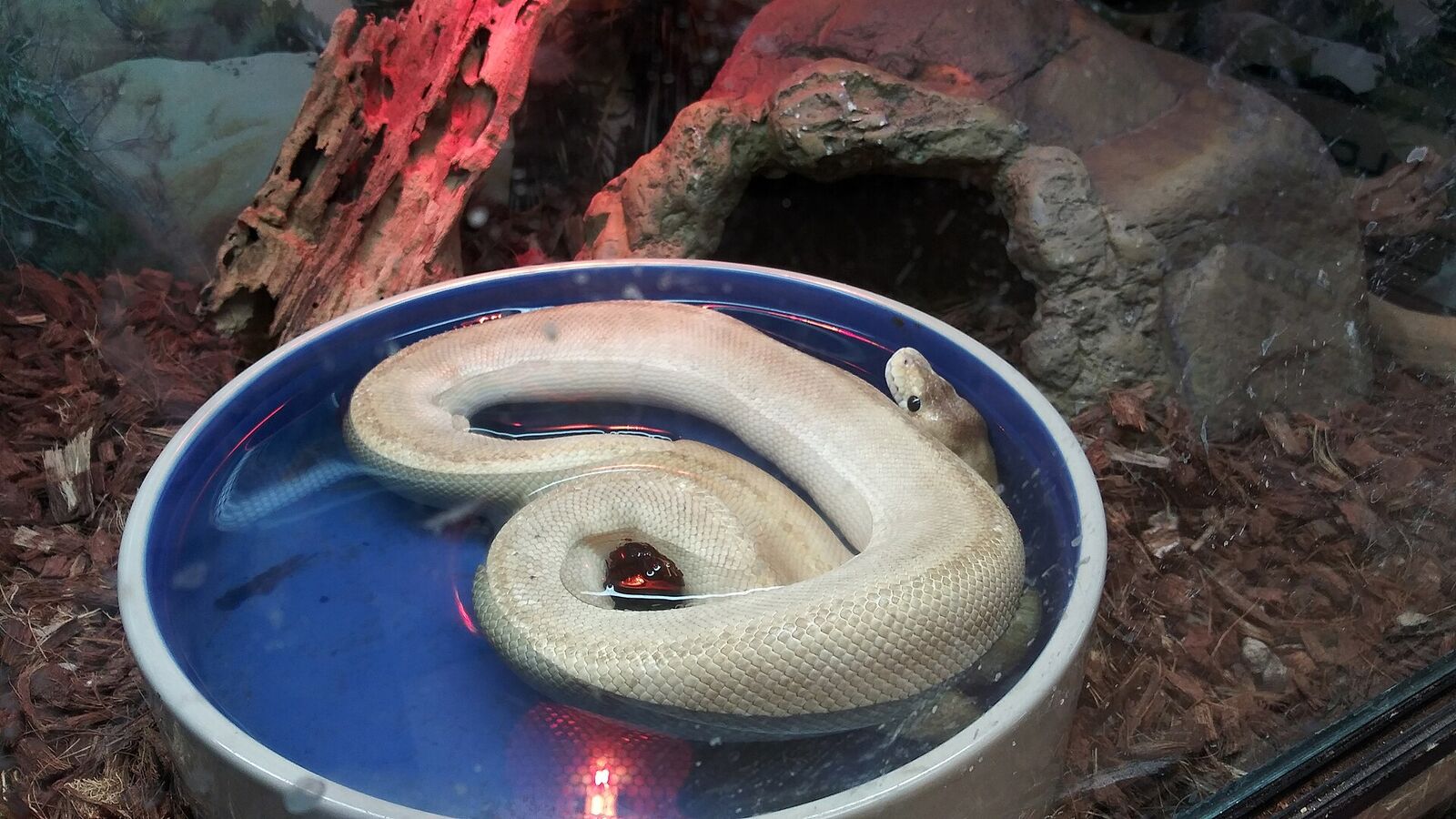
Ball python
Python regius
The calm, curl-up classic of pet snakes.
Pet trade
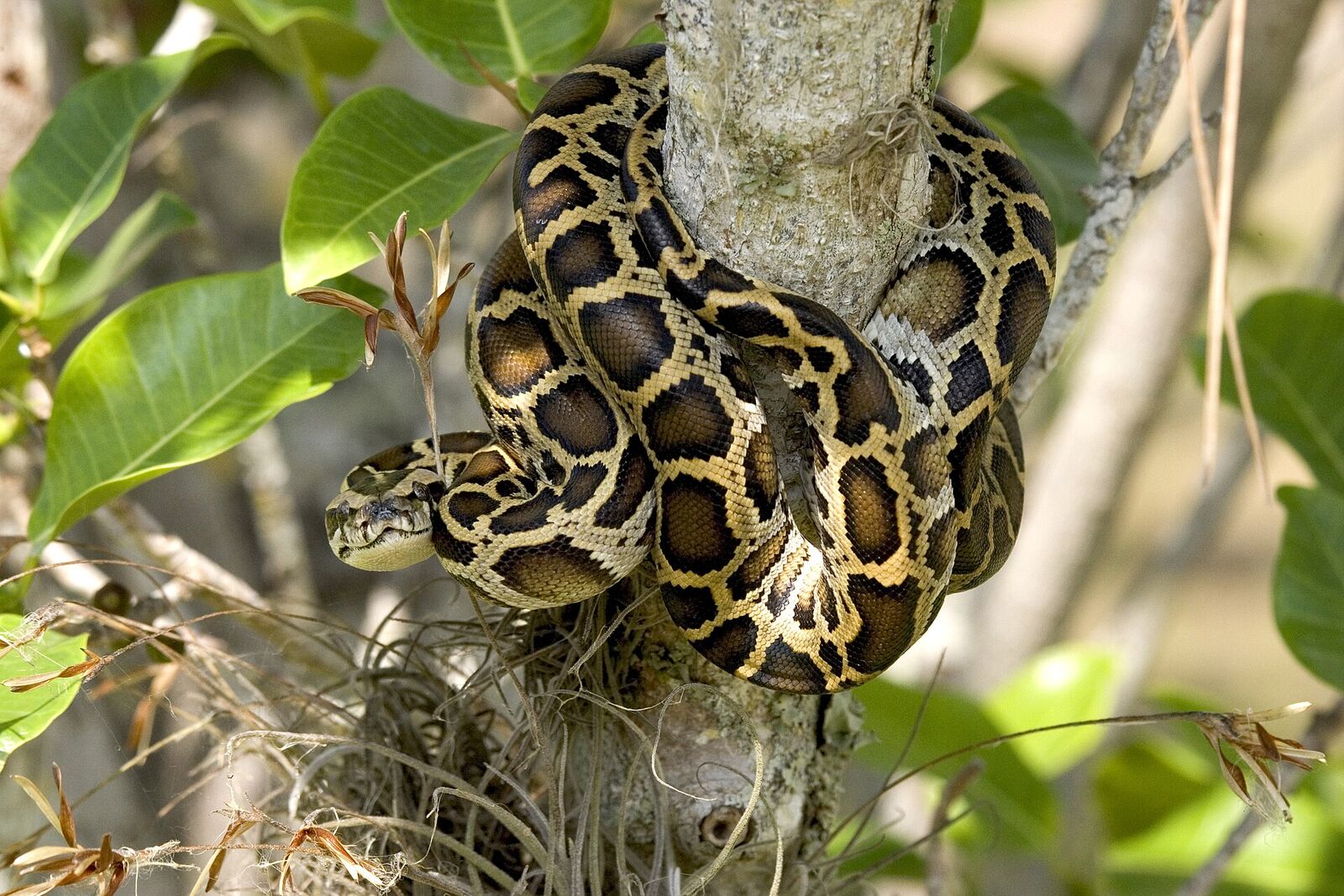
Burmese python
Python bivittatus
A heavy-bodied giant with a famously calm reputation.
Pet trade
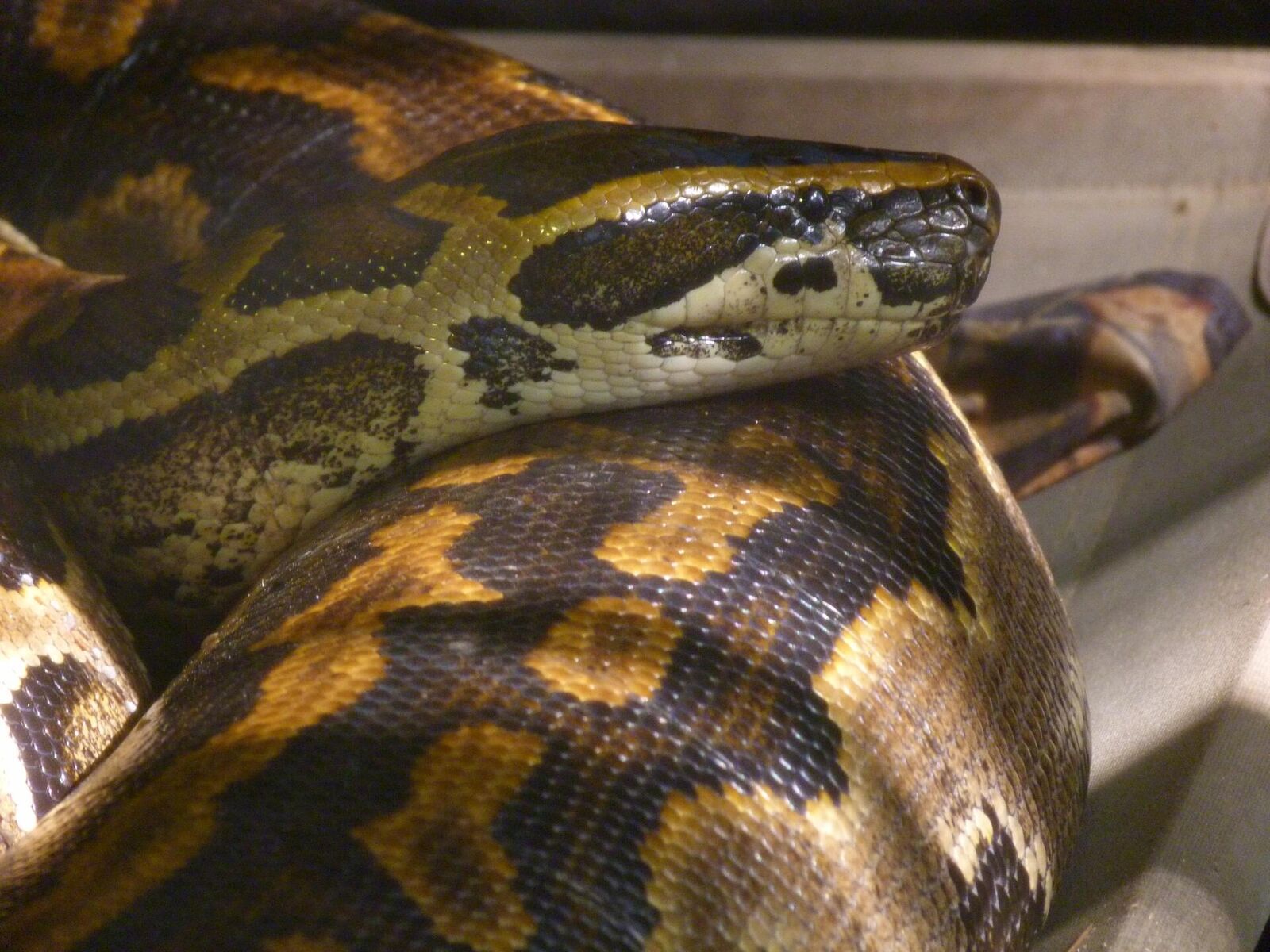
Central African rock python
Python sebae
Africa's largest snake, powerful and spirited.
Pet trade
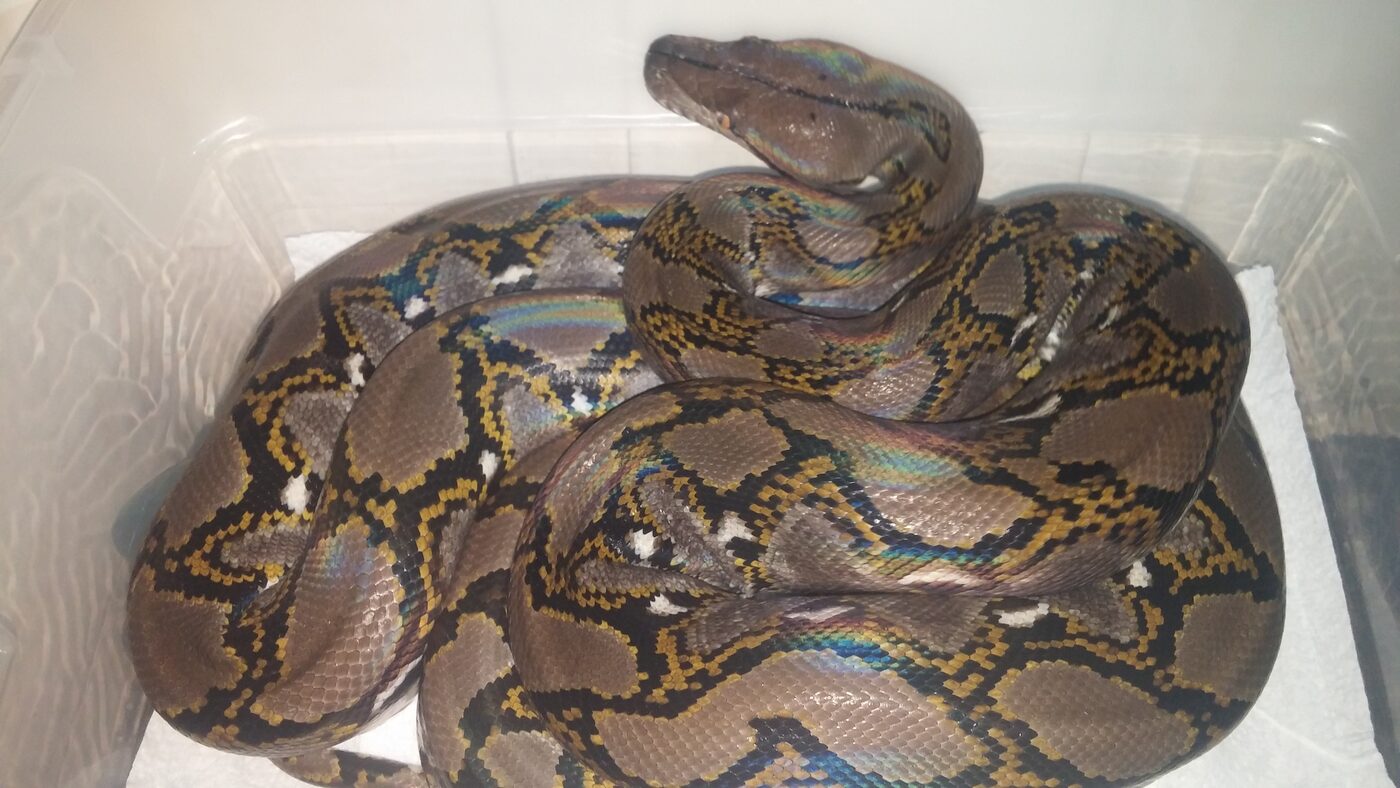
Reticulated python
Malayopython reticulatus
The world's longest snake, and a brilliant, active giant.
Pet trade

Amethystine python
Simalia amethistina
Pet trade

Angolan python
Python anchietae
Pet trade