
Home / Reptiles / Lizards / Chamaeleonidae / Johnston's Chameleon
Some federal rules applyJohnston's Chameleon
Trioceros johnstoni
Reptiles › Lizards (Lacertilia) › Chamaeleonidae (Chameleons)
Trioceros johnstoni, known commonly as Johnston's chameleon, Johnston's three-horned chameleon, and the Ruwenzori three-horned chameleon, is a species of chameleon, a lizard in the family Chamaeleonidae.
From Wikipedia: Trioceros johnstoni, CC BY-SA 4.0 (excerpt)

Care at a glance
Species-specific values
Values researched for this exact species. Air, surface and water temperatures are listed separately, and each source is kept as published rather than averaged.
| Minimum enclosure | Minimum cage size is 2’ x 2’ x 4’ tall for males and females. Source: chameleonacademy.com | |
| Basking surface temperature | at least 80 °F Source: chameleonacademy.com | |
| Warm side air temperature | Daytime temperatures should not go above room temperature. Source: chameleonacademy.com | |
| Humidity | 80–100 % Source: chameleonacademy.com | |
| Humidity | 60–80 % Source: chameleonacademy.com | |
| Uvb lighting | Target UVI 3 at the basking branch, with a maximum of UVI 6. Source: chameleonacademy.com | |
| Feeding frequency | At adult size, feed every other day. Source: chameleonacademy.com | |
| Social housing | House males and females separately. Source: chameleonacademy.com | |
| Substrate | Use a densely planted terrarium. Source: chameleonacademy.com |
Understanding the animal
About this animal
About this animal
The species is endemic to highlands in the Albertine Rift in central Africa. It reaches up to 30 cm (12 in) in total length (including tail).
From Wikipedia: Trioceros johnstoni, CC BY-SA 4.0 (excerpt)
In the wild
In the wild
| Overview | Trioceros johnstoni, known commonly as Johnston's chameleon, Johnston's three-horned chameleon, and the Ruwenzori three-horned chameleon, is a species of chameleon, a lizard in the family Chamaeleonidae. The species is endemic to highlands in the Albertine Rift in central Africa. It reaches up to 30 cm in total length (including tail). Only the adult male has three horns. — From Wikipedia: Trioceros johnstoni, CC BY-SA 4.0 (excerpt) |
| Where it lives | T. johnstoni is found in forests at altitudes between 1000 and(-) in the Albertine Rift of eastern Democratic Republic of the Congo, western Burundi, western Rwanda, and southwestern Uganda, but also tolerates semi-urbanized environments as long as some trees and bushes remain. — From Wikipedia: Trioceros johnstoni, CC BY-SA 4.0 (excerpt) |
| Behavior | Males of T. johnstoni are fiercely territorial and readily will fight other males, using their horns and biting. — From Wikipedia: Trioceros johnstoni, CC BY-SA 4.0 (excerpt) |
| Reproduction | T. johnstoni is oviparous, with the female laying 4–23 eggs per clutch. — From Wikipedia: Trioceros johnstoni, CC BY-SA 4.0 (excerpt) |
Read about this species in the wild at The Reptile Database.
Native climate (measured)
Native climate (measured)
| Warm-season highs | about 79°F (up to 87°F in the hottest sampled areas) |
| Cool-season lows | about 56°F (down to 50°F in the coldest sampled areas) |
| Average temperature | 61–73°F across sampled records |
| Relative humidity | 75–81% on average (driest month about 71%) |
| Rainfall | about 1348 mm a year |
Measured at 34 wild occurrence records sampled against WorldClim 2.1 climate data (1970–2000 averages). Air conditions in the range are ecological context, not enclosure settings: microhabitats such as burrows, leaf litter or basking rocks can be cooler, warmer or more humid.
Profile
Profile
Researched for this exact species. Sources are listed under In the wild above.
Data and studies
The numbers
The numbers
Each bar is what one source reports. Where several sources weigh in, the dashed gold band marks their average.
Gestation
Sources for this sheet
- Myhrvold et al. (2015). An amniote life-history database. Ecology 96: 3109 Peer-reviewed researchPeer-reviewed compilation of life-history data for over 21,000 birds, mammals and reptiles.
- Species+ (UNEP-WCMC and the CITES Secretariat) Zoo, university or veterinaryThe official database of species listed under CITES. UNEP (2026). The Species+ Website. Nairobi, Kenya. Compiled by UNEP-WCMC, Cambridge, UK. Available at: www.speciesplus.net. [Accessed 04/10/2026].
- USFWS International Affairs: CITES Zoo, university or veterinaryFederal agency that issues CITES permits.
- The Reptile Database Peer-reviewed researchScientist-curated catalog of every reptile species, with taxonomy and literature.
- GBIF Backbone Taxonomy (Global Biodiversity Information Facility) (CC BY 4.0) Peer-reviewed researchInternational scientific taxonomy used here for classification. GBIF Secretariat (2023). GBIF Backbone Taxonomy. Checklist dataset https://doi.org/10.15468/39omei, accessed via GBIF.org.
- Wikipedia (species article) (CC BY-SA 4.0) Community referenceFree encyclopedia; useful overviews with their own citations. Short excerpts are quoted under CC BY-SA 4.0, each credited with a link to its article.
More chameleons
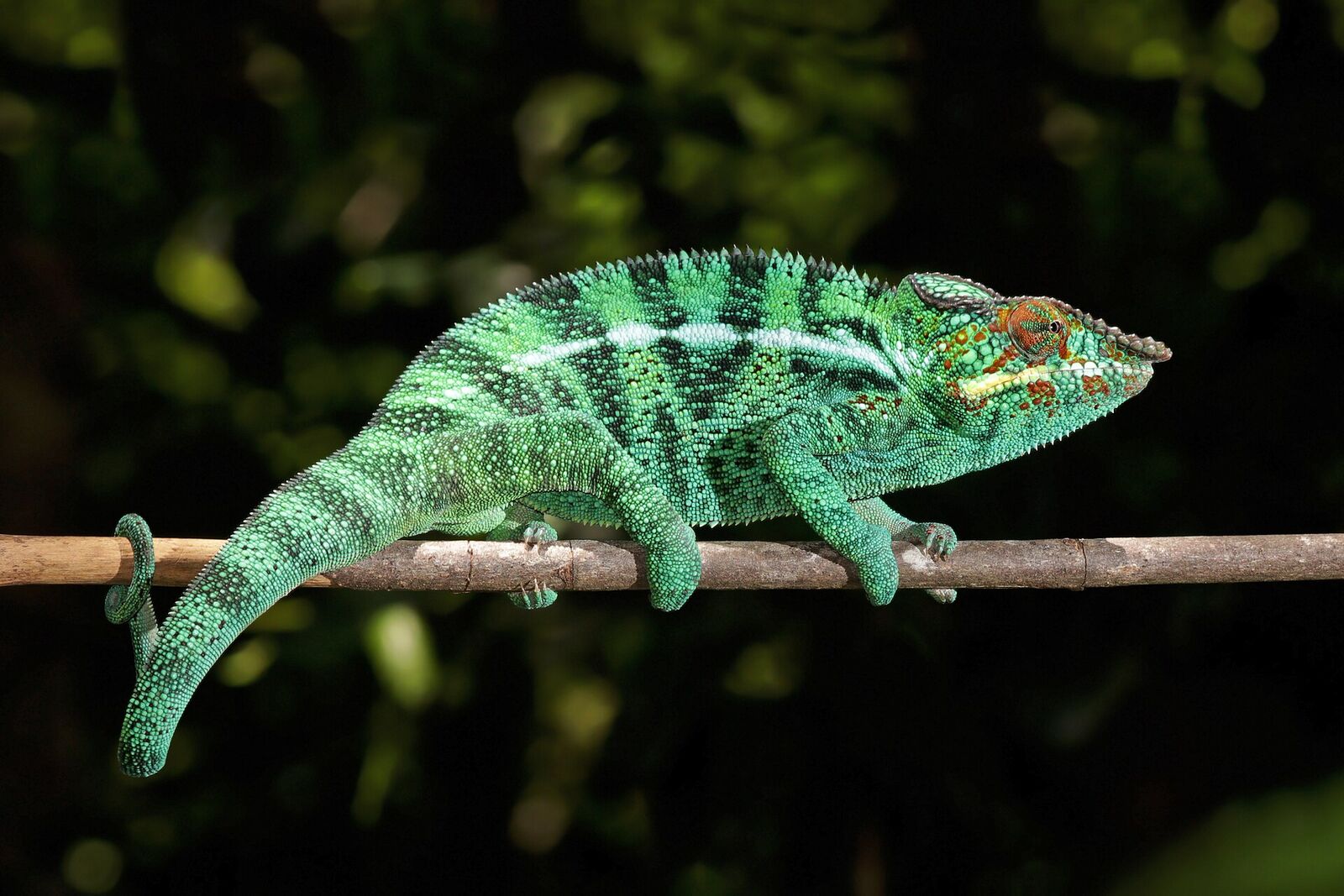
Panther chameleon
Furcifer pardalis
The most colorful chameleon of all.
Pet trade
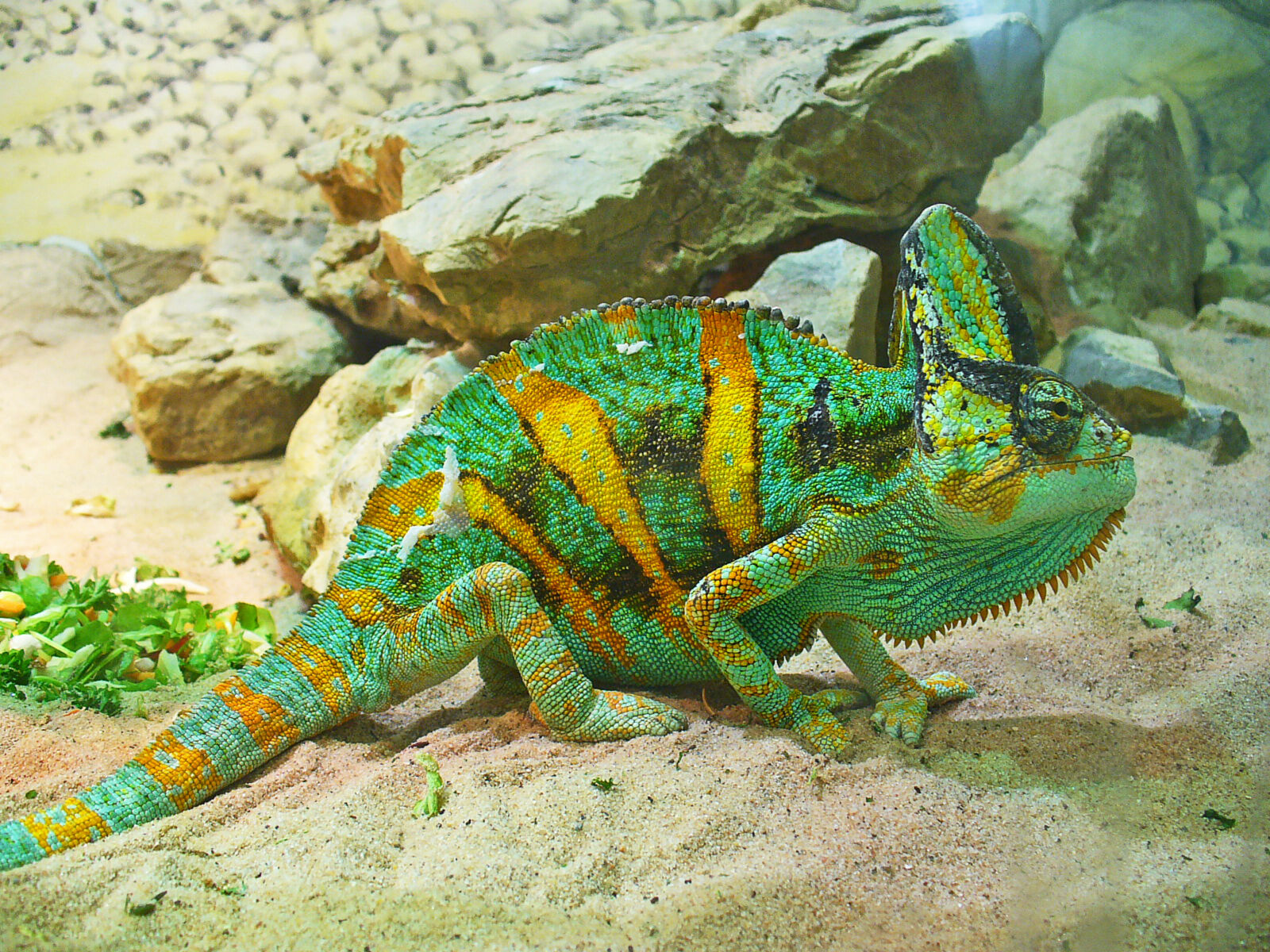
Veiled chameleon
Chamaeleo calyptratus
Color-shifting, independent, look-don't-touch.
Pet trade

Bearded pygmy chameleon
Rieppeleon brevicaudatus
Pet trade

Cape dwarf chameleon
Bradypodion pumilum
Pet trade

Carpet chameleon
Furcifer lateralis
Pet trade

Common chameleon
Chamaeleo chamaeleon
Zoos & aquariums