
Home / Birds / Parrots / Yellow-collared (masked) lovebird
Some federal rules applyYellow-collared (masked) lovebird
Agapornis personatus
Birds › Parrots (Psittaciformes) › Psittaculidae (Old World parrots, lorikeets and lovebirds)
The yellow-collared lovebird (Agapornis personatus), also called masked lovebird, black-masked lovebird or eye ring lovebird, is a monotypic species of bird of the lovebird genus in the parrot family Psittaculidae.

Care at a glance
Species-specific values
Values researched for this exact species. Air, surface and water temperatures are listed separately, and each source is kept as published rather than averaged.
| Diet | Feed a varied diet with small parrot pellets as a staple, seed mix, fresh vegetables and occasional fruit; provide fresh water and a calcium block. Source: psittacology.com | |
| Minimum enclosure | 113 °F (45 °C) Source: psittacology.com | |
| Substrate | Use natural perches, not plastic or dowel. Source: psittacology.com |
Understanding the animal
About this animal
About this animal
They are native to Arusha Region of Tanzania and have been introduced to Burundi and Kenya. Although they have been observed in the wild in Puerto Rico, they are probably the result of escaped pets, and no reproduction has been recorded.
From Wikipedia: Yellow-collared lovebird, CC BY-SA 4.0 (excerpt)
In the wild
In the wild
Researched for this exact species, not its family. Wild conditions are context, not enclosure settings.1
| Where it lives | Primarily inland Tanzania southeast of Lake Victoria, especially savanna and grassland with acacias and baobabs. Commonly occupies plateaus around 3,600–5,900 feet with dependable drinking water. |
| Ground it lives on | Tree branches and grassy savanna feeding areas. |
| Social life | Strong, persistent pair bonds within small flocks; can be aggressive toward unfamiliar birds or rivals. |
| Wild diet | Grass and tree seeds, including Acacia, millet and sorghum; also bark and cultivated grain. |
| Behavior to plan for | Females carry bark strips and stalks to weave bulky, domed nests inside tree hollows. Birds maintain contact through calls and mutual grooming. |
Native climate (measured)
Native climate (measured)
| Warm-season highs | about 84°F (up to 88°F in the hottest sampled areas) |
| Cool-season lows | about 55°F (down to 38°F in the coldest sampled areas) |
| Average temperature | 62–73°F across sampled records |
| Relative humidity | 65–70% on average (driest month about 59%) |
| Rainfall | about 688 mm a year, with strong wet and dry seasons |
Measured at 60 wild occurrence records sampled against WorldClim 2.1 climate data (1970–2000 averages). Air conditions in the range are ecological context, not enclosure settings: microhabitats such as burrows, leaf litter or basking rocks can be cooler, warmer or more humid.
Data and studies
Researched care notes
Researched care notes
Findings checked against veterinary, zoo, welfare, keeper and peer-reviewed sources. Air, basking-surface and water temperatures are kept separate, and where sources disagree both are shown. “Study” notes report what a paper measured, not a universal rule.
Budgerigars, Cockatiels, And Lovebirds (nutrition module, not completed species sheets)
Researched for this genus; applies to its species unless a species note says otherwise.
- MSD discusses a mixed formulated-food/seed strategy for these small parrots, differing from its large-parrot percentages.1
- Offered food and selected food may differ. Measure actual consumption during diet changes.1
Lovebirds
Researched for this genus; applies to its species unless a species note says otherwise.
- Lovebirds can be territorial and may pursue larger animals; social boldness does not establish safe contact with other birds, dogs or cats.2
Budgerigar, Cockatiel And Lovebirds (Shared reproductive additions)
Researched for this genus; applies to its species unless a species note says otherwise.
- Persistent laying can deplete calcium and lead to egg binding or other reproductive disease; it requires assessment beyond simply replacing a cuttlebone.3
- For birds laying excessively, veterinary management can include reducing reproductive cues such as nest boxes, extended daylight and sexualized owner interactions.3
- A weak or nonperching hen with straining or breathing difficulty may have egg binding and needs urgent veterinary attention.3
The numbers
The numbers
Each bar is what one source reports. Where several sources weigh in, the dashed gold band marks their average.
Typical adult weight
Average adult body mass in each database (FishBase gives the maximum recorded weight).
Incubation
Sources for this sheet
- Myhrvold et al. (2015). An amniote life-history database. Ecology 96: 3109 Peer-reviewed researchPeer-reviewed compilation of life-history data for over 21,000 birds, mammals and reptiles.
- Species+ (UNEP-WCMC and the CITES Secretariat) Zoo, university or veterinaryThe official database of species listed under CITES. UNEP (2026). The Species+ Website. Nairobi, Kenya. Compiled by UNEP-WCMC, Cambridge, UK. Available at: www.speciesplus.net. [Accessed 04/10/2026].
- USFWS International Affairs: CITES Zoo, university or veterinaryFederal agency that issues CITES permits.
- 9 CFR 2.1: Animal Welfare Act licensing (USDA) Zoo, university or veterinaryWho needs a USDA license to breed, sell or exhibit animals.
- GBIF Backbone Taxonomy (Global Biodiversity Information Facility) (CC BY 4.0) Peer-reviewed researchInternational scientific taxonomy used here for classification. GBIF Secretariat (2023). GBIF Backbone Taxonomy. Checklist dataset https://doi.org/10.15468/39omei, accessed via GBIF.org.
- Wikipedia (species article) (CC BY-SA 4.0) Community referenceFree encyclopedia; useful overviews with their own citations. Short excerpts are quoted under CC BY-SA 4.0, each credited with a link to its article.
- iNaturalist (captive observations) Community referenceCommunity observation platform run by the California Academy of Sciences and National Geographic; observations marked captive show animals living in homes, zoos and aquariums.
More old world parrots, lorikeets and lovebirds
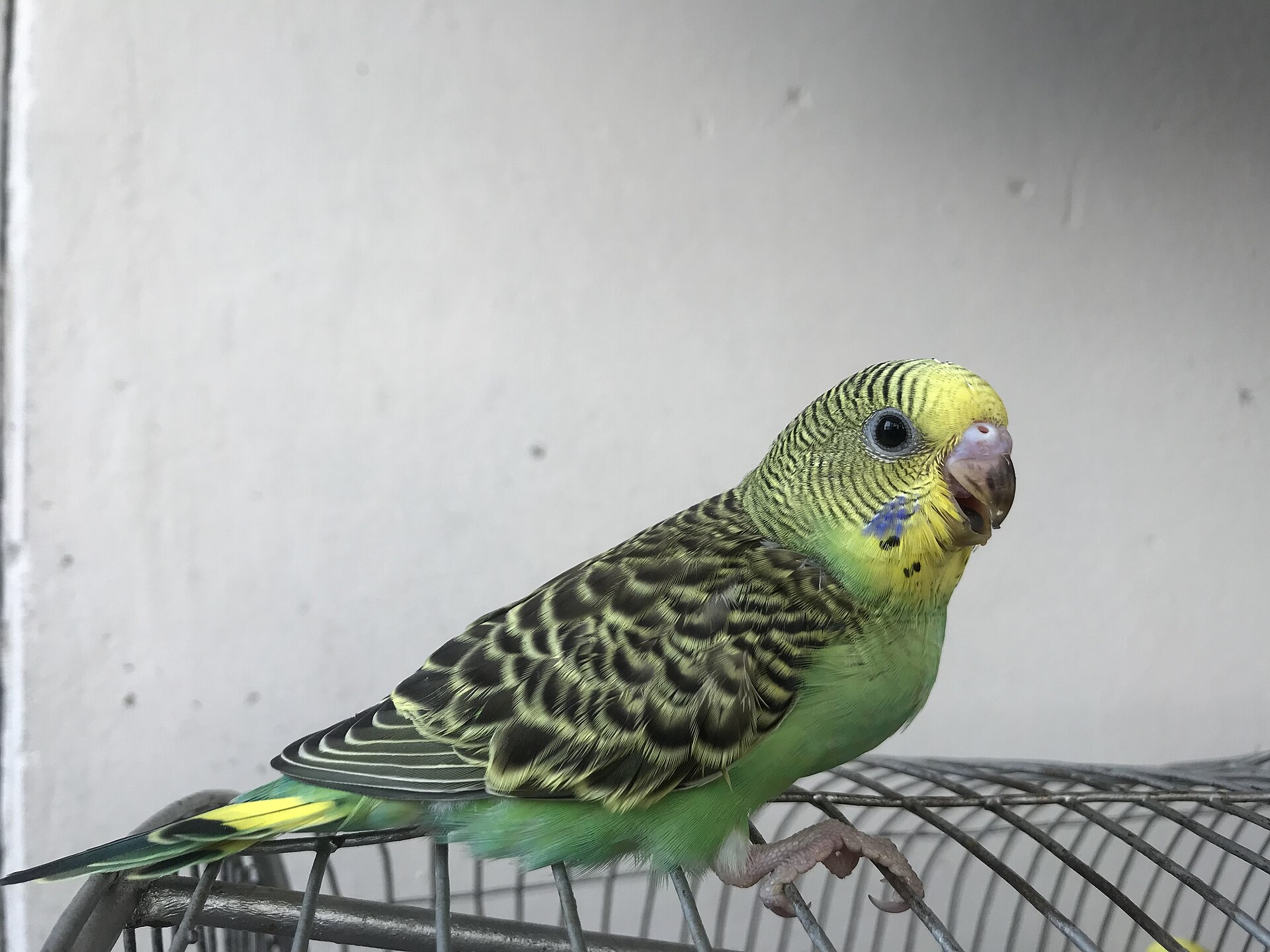
Budgerigar
Melopsittacus undulatus
A small parrot with a big vocabulary.
Pet trade

Alexandrine parakeet
Psittacula eupatria
Pet trade

Black-capped lory
Lorius lory
Pet trade

Black-cheeked lovebird
Agapornis nigrigenis
Pet trade

Blue lorikeet
Vini peruviana
Zoos & aquariums

Blue-crowned hanging parrot
Loriculus galgulus
Zoos & aquariums