
Home / Invertebrates / Ants and bees / Black garden ant
No federal permit to keepBlack garden ant
Lasius niger
Invertebrates › Ants and bees (Hymenoptera) › Formicidae (Ants)
Experience: Easy

FamilyAnts
Record lifespan28 years
Kept byPet trade
Care at a glance
Species-specific values
Values researched for this exact species. Air, surface and water temperatures are listed separately, and each source is kept as published rather than averaged.
| Minimum enclosure | Small colonies do best in test tubes with foraging access; larger colonies can use ytong nests or a dirt setup. Source: antkeepers.com | |
| Diet | Offer sugar or honey water, fruit, and protein sources for the queen and larvae. Source: antkeepers.com | |
| Nest temperature | 68–81 °F (20–27 °C) Source: antkeepers.com | |
| Seasonal cooling | Hibernate below 5-10°C, usually from October to around March; no food is needed during hibernation. Source: antkeepers.com | |
| Humidity | 10–50 % Source: antkeepers.com | |
| Nest temperature | 68–77 °F (20–25 °C) Source: antsdavey.co.uk | |
| Warm side air temperature | 64–82 °F (18–28 °C) Source: antsdavey.co.uk | |
| Humidity | 40–60 % Source: antsdavey.co.uk | |
| Humidity | 30–70 % Source: antsdavey.co.uk | |
| Seasonal cooling | 41–50 °F (5–10 °C) Source: antsdavey.co.uk | |
| Diet | Offer water, freshly killed protein such as mealworms, chicken or ham, and carbohydrates such as ant nectar, sugar water or honey water. Source: antsdavey.co.uk | |
| Social housing | One queen per colony. Source: antsdavey.co.uk | |
| Substrate | Suitable nests include acrylic, wooden, Ytong, 3D-printed or natural bioactive setups. Source: antsdavey.co.uk | |
| Feeding frequency | For founding colonies, provide protein and carbohydrates once a week; later steps add carbohydrate and protein three days apart. Source: antsdavey.co.uk |
Understanding the animal
In the wild
In the wild
| Overview | The black garden ant (Lasius niger), also known as the common black ant, is a formicine ant, the type species of the genus Lasius, which is found across Europe and in some parts of North America, and believed to inhabit certain parts of Asia. The European species was split into two species; L. niger, which is found in open areas; and L. platythorax, which is found in forest habitats. It is monogynous, meaning colonies contain a single queen. Lasius niger colonies normally range from 4,000 to 7,000 workers, but can reach 40,000 in rare cases. — From Wikipedia: Lasius niger, CC BY-SA 4.0 (excerpt) |
| Behavior | When building their colony, the ants structure it to inhibit the transmission of different contagions. Different communities within the colony are segregated by a limited number of connective nodes, allowing for greater protection of vulnerable hive members, such as larvae and pupae, and the queen. — From Wikipedia: Lasius niger, CC BY-SA 4.0 (excerpt) |
Data and studies
The numbers
The numbers
Each bar is what one source reports. Where several sources weigh in, the dashed gold band marks their average.
Maximum recorded lifespan
Reported28 years
Longest recorded lifespan reported by each database; typical lifespans are usually shorter.
Sources for this sheet
- AnAge: The Animal Ageing and Longevity Database (Human Ageing Genomic Resources) (CC BY 3.0) Peer-reviewed researchCurated, referenced longevity and life-history records for thousands of species; maximum lifespans are often from zoo animals.
- GBIF Backbone Taxonomy (Global Biodiversity Information Facility) (CC BY 4.0) Peer-reviewed researchInternational scientific taxonomy used here for classification. GBIF Secretariat (2023). GBIF Backbone Taxonomy. Checklist dataset https://doi.org/10.15468/39omei, accessed via GBIF.org.
- iNaturalist (captive observations) Community referenceCommunity observation platform run by the California Academy of Sciences and National Geographic; observations marked captive show animals living in homes, zoos and aquariums.
More ants
No federal permit
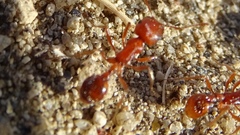
California harvester ant
Pogonomyrmex californicus
Pet trade
Easy

No federal permit
Florida carpenter ant
Camponotus floridanus
Pet trade
Easy
No federal permit
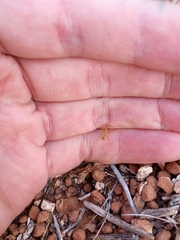
Honeypot ant
Myrmecocystus mexicanus
Pet trade
Easy

No federal permit
Leafcutter ant
Atta cephalotes
Pet trade
Easy

No federal permit
Mediterranean harvester ant
Messor barbarus
Pet trade
Easy

No federal permit
Pavement ant
Tetramorium immigrans
Pet trade
Easy