
Home / Invertebrates / Ants and bees / Pavement ant
No federal permit to keepPavement ant
Tetramorium immigrans
Invertebrates › Ants and bees (Hymenoptera) › Formicidae (Ants)
Experience: Easy

FamilyAnts
Kept byPet trade
HabitatPavement ants form colonies under stones
Care at a glance
Species-specific values
Values researched for this exact species. Air, surface and water temperatures are listed separately, and each source is kept as published rather than averaged.
| Warm side air temperature | 70–81 °F (21–27 °C) Source: ant-shack.com | |
| Humidity | 40–60 % Source: ant-shack.com | |
| Feeding frequency | Feed small portions 2–3 times per week. Source: ant-shack.com | |
| Seasonal cooling | 50–59 °F (10–15 °C) Source: ant-shack.com | |
| Nest temperature (warm part) | 80–83 °F Source: statesideants.com | |
| Humidity | 80–90 % Source: statesideants.com | |
| Night temperature | 40 °F Source: statesideants.com | |
| Diet | They accept varied protein foods and liquid sugars or some seeds. Source: statesideants.com | |
| Feeding frequency | Feed as much protein as they will take every day for rapid growth. Source: statesideants.com | |
| Seasonal cooling | Hibernation is optional; gradually cool them to 40°F over a few weeks and keep them there for 2–3 months if chosen. Source: statesideants.com |
Understanding the animal
In the wild
In the wild
| Overview | Tetramorium immigrans—also known as the immigrant pavement ant, pavement ant, and the sugar ant in parts of North America—is an ant native to Europe, which also occurs as an introduced pest in North America. Its common name comes from the fact that colonies in North America usually make their nests under pavement. This is one of the most commonly seen ants in North America, being well adapted to urban and suburban habitats. It is distinguished by a single pair of spines on the back, two nodes on the petiole, and grooves on the head and thorax. — From Wikipedia: Wikipedia, CC BY-SA 4.0 (excerpt) |
Read about this species in the wild at Animal Diversity Web.
Sources for this sheet
- GBIF Backbone Taxonomy (Global Biodiversity Information Facility) (CC BY 4.0) Peer-reviewed researchInternational scientific taxonomy used here for classification. GBIF Secretariat (2023). GBIF Backbone Taxonomy. Checklist dataset https://doi.org/10.15468/39omei, accessed via GBIF.org.
- iNaturalist (captive observations) Community referenceCommunity observation platform run by the California Academy of Sciences and National Geographic; observations marked captive show animals living in homes, zoos and aquariums.
More ants

No federal permit
Black garden ant
Lasius niger
Pet trade
Easy
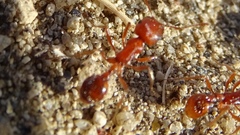
No federal permit
California harvester ant
Pogonomyrmex californicus
Pet trade
Easy

No federal permit
Florida carpenter ant
Camponotus floridanus
Pet trade
Easy
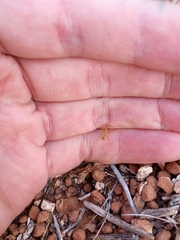
No federal permit
Honeypot ant
Myrmecocystus mexicanus
Pet trade
Easy

No federal permit
Leafcutter ant
Atta cephalotes
Pet trade
Easy

No federal permit
Mediterranean harvester ant
Messor barbarus
Pet trade
Easy