
Home / Invertebrates / Ants and bees / Florida carpenter ant
No federal permit to keepFlorida carpenter ant
Camponotus floridanus
Invertebrates › Ants and bees (Hymenoptera) › Formicidae (Ants)
Experience: Easy

FamilyAnts
Kept byPet trade
Care at a glance
Species-specific values
Values researched for this exact species. Air, surface and water temperatures are listed separately, and each source is kept as published rather than averaged.
| Warm side air temperature | 81–86 °F Source: antessentials.wordpress.com | |
| Cool side air temperature | 75–77 °F Source: antessentials.wordpress.com | |
| Humidity | 40–55 % Source: antessentials.wordpress.com | |
| Diet | Captive colonies can eat listed carbohydrates and protein sources. Source: antessentials.wordpress.com | |
| Social housing | Colonies are monogyne (one queen per colony). Source: antessentials.wordpress.com | |
| Seasonal cooling | No hibernation period is required. Source: antessentials.wordpress.com |
Understanding the animal
In the wild
In the wild
| Overview | Camponotus floridanus, or Florida carpenter ant, is a species of ant in the genus Camponotus. First described as Formica floridana by Buckley in 1866, the species was moved to Camponotus by Mayr in 1886. The ant is widespread in Florida and occurs as far north as North Carolina and as far west as Mississippi. — From Wikipedia: Camponotus floridanus, CC BY-SA 4.0 (excerpt) |
| Where it lives | Florida carpenter ants' native range is most highly concentrated throughout Florida, though it is also spread predominantly along the coastal areas northwards into Georgia and southern South Carolina, with minor reports as far north as Clayton, North Carolina. — From Wikipedia: Camponotus floridanus, CC BY-SA 4.0 (excerpt) |
| Wild diet | The Florida carpenter ant is omnivorous, taking arthropod food items as well as sweets, such as nectar or the sugary secretions produced by aphids in which they care for and defend. Like other Camponotus, they have their own species of symbiotic bacteria in the genus Blochmannia that inhabit bacteriocytes in their midgut to supplement their nitrogen-poor diets. — From Wikipedia: Camponotus floridanus, CC BY-SA 4.0 (excerpt) |
| Behavior | These ants are highly aggressive and fast moving, being quick to swarm any disturbance to their nest. Workers are relentless as they attack, searching meticulously for weaknesses in the skin and targeting vulnerable areas such as the skin creases or the nail cuticles. — From Wikipedia: Camponotus floridanus, CC BY-SA 4.0 (excerpt) |
| Reproduction | Nuptial flights begin around May and peak in the summer months. Flights are triggered after heavy rains have raised the humidity of the air to 80-90% and temperatures around 80+°F are present half an hour after sunset. The female alates mate in the air once then ground themselves to search for a location to establish a new colony. — From Wikipedia: Camponotus floridanus, CC BY-SA 4.0 (excerpt) |
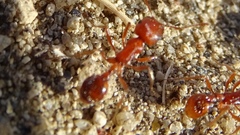
| Appearance and size | Camponotus floridanus is one of the most familiar ant species in Florida owing both to its large size and conspicuous coloration. Workers and queens are bicolored, having a reddish-orange head and a bright to dullish orange colored mesosoma and legs, contrasted sharply by a deep black gaster. Male alates of this species are more concolorous, primarily ranging in the rusty to cider oranges. — From Wikipedia: Camponotus floridanus, CC BY-SA 4.0 (excerpt) |
Sources for this sheet
- GBIF Backbone Taxonomy (Global Biodiversity Information Facility) (CC BY 4.0) Peer-reviewed researchInternational scientific taxonomy used here for classification. GBIF Secretariat (2023). GBIF Backbone Taxonomy. Checklist dataset https://doi.org/10.15468/39omei, accessed via GBIF.org.
- iNaturalist (captive observations) Community referenceCommunity observation platform run by the California Academy of Sciences and National Geographic; observations marked captive show animals living in homes, zoos and aquariums.
More ants

No federal permit
Black garden ant
Lasius niger
Pet trade
Easy
No federal permit
California harvester ant
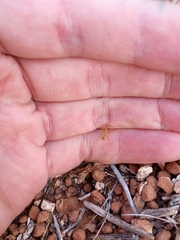
Pogonomyrmex californicus
Pet trade
Easy
No federal permit
Honeypot ant
Myrmecocystus mexicanus
Pet trade
Easy

No federal permit
Leafcutter ant
Atta cephalotes
Pet trade
Easy

No federal permit
Mediterranean harvester ant
Messor barbarus
Pet trade
Easy

No federal permit
Pavement ant
Tetramorium immigrans
Pet trade
Easy