
Home / Reptiles / Lizards / Chamaeleonidae / Southern Carpet Chameleon
Some federal rules applySouthern Carpet Chameleon
Furcifer major
Reptiles › Lizards (Lacertilia) › Chamaeleonidae (Chameleons)
Furcifer major, the southern carpet chameleon, is a species of chameleon found in various dry habitats of southern Madagascar.

Care at a glance
Species-specific values
Values researched for this exact species. Air, surface and water temperatures are listed separately, and each source is kept as published rather than averaged.
| Basking surface temperature | 90 °F (up to 32 °C) Source: terrarium.com.pl | |
| Warm side air temperature | 79–82 °F (26–28 °C) Source: terrarium.com.pl | |
| Night temperature | 64 °F (at least 18 °C) Source: terrarium.com.pl | |
| Humidity | 40–60 % Source: terrarium.com.pl | |
| Humidity | 50–70 % Source: terrarium.com.pl | |
| Minimum enclosure | Terrarium dimensions should be 45 × 45 × 90 cm. Source: terrarium.com.pl | |
| Substrate | Use thin branches arranged to provide plenty of climbing places. Source: terrarium.com.pl | |
| Substrate | Live plants can be used to maintain terrarium humidity. Source: terrarium.com.pl | |
| Substrate | Mist at least once daily. Source: terrarium.com.pl | |
| Diet | Provide vitamins occasionally, 3–4 times monthly; give calcium at every other feeding to juveniles and pregnant females. Source: terrarium.com.pl | |
| Feeding frequency | Feed 2–3 times weekly; females and juveniles more often. Source: terrarium.com.pl | |
| Seasonal cooling | For pseudo-brumation, gradually lower temperature and shorten the day to 7–8 hours for about 3–4 months. Source: terrarium.com.pl |
Understanding the animal
About this animal
About this animal
It was formerly considered a part of Furcifer lateralis.
From Wikipedia: Furcifer major, CC BY-SA 4.0 (excerpt)
In the wild
In the wild
Read about this species in the wild at The Reptile Database.
Native climate (measured)
Native climate (measured)
| Warm-season highs | about 90°F (up to 94°F in the hottest sampled areas) |
| Cool-season lows | about 53°F (down to 50°F in the coldest sampled areas) |
| Average temperature | 68–77°F across sampled records |
| Relative humidity | 63–76% on average (driest month about 67%) |
| Rainfall | about 782 mm a year, with strong wet and dry seasons |
Measured at 27 wild occurrence records sampled against WorldClim 2.1 climate data (1970–2000 averages). Air conditions in the range are ecological context, not enclosure settings: microhabitats such as burrows, leaf litter or basking rocks can be cooler, warmer or more humid.
Profile
Profile
Researched for this exact species. Sources are listed under In the wild above.
Data and studies
The numbers
The numbers
Each bar is what one source reports. Where several sources weigh in, the dashed gold band marks their average.
Typical adult weight
Average adult body mass in each database (FishBase gives the maximum recorded weight).
Adult snout-to-vent length
Body length without the tail.
Incubation
Basking spot
Species-specific values from keeper care sheets. Basking figures are often surface readings taken with an infrared thermometer, which run hotter than air.
Sources for this sheet
- Myhrvold et al. (2015). An amniote life-history database. Ecology 96: 3109 Peer-reviewed researchPeer-reviewed compilation of life-history data for over 21,000 birds, mammals and reptiles.
- Reptiles Magazine (care articles) Experienced keeper or breederEstablished reptile and amphibian hobby magazine; care articles are written by breeders, keepers and veterinarians.
- Species+ (UNEP-WCMC and the CITES Secretariat) Zoo, university or veterinaryThe official database of species listed under CITES. UNEP (2026). The Species+ Website. Nairobi, Kenya. Compiled by UNEP-WCMC, Cambridge, UK. Available at: www.speciesplus.net. [Accessed 04/10/2026].
- USFWS International Affairs: CITES Zoo, university or veterinaryFederal agency that issues CITES permits.
- The Reptile Database Peer-reviewed researchScientist-curated catalog of every reptile species, with taxonomy and literature.
- GBIF Backbone Taxonomy (Global Biodiversity Information Facility) (CC BY 4.0) Peer-reviewed researchInternational scientific taxonomy used here for classification. GBIF Secretariat (2023). GBIF Backbone Taxonomy. Checklist dataset https://doi.org/10.15468/39omei, accessed via GBIF.org.
- Wikipedia (species article) (CC BY-SA 4.0) Community referenceFree encyclopedia; useful overviews with their own citations. Short excerpts are quoted under CC BY-SA 4.0, each credited with a link to its article.
More chameleons
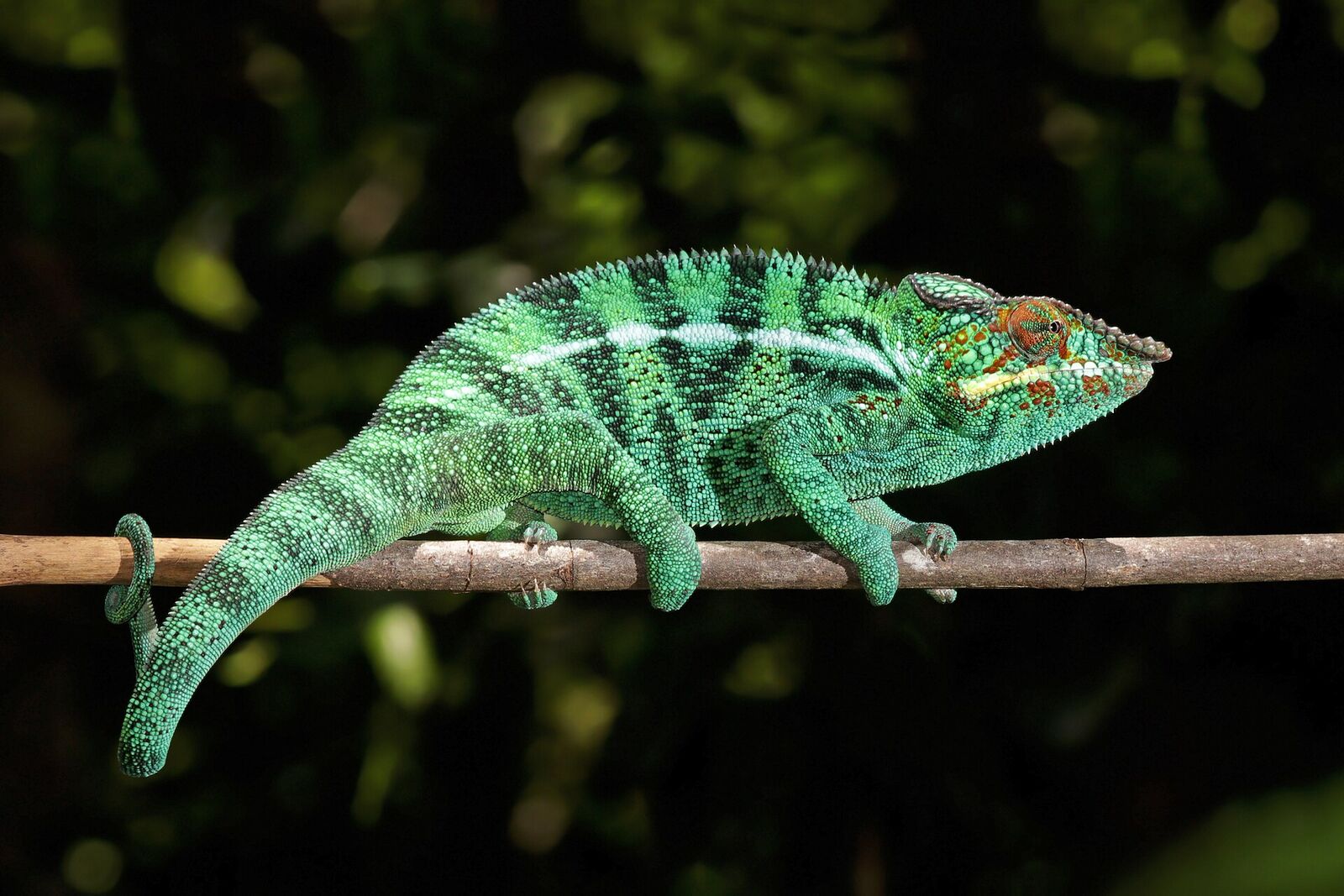
Panther chameleon
Furcifer pardalis
The most colorful chameleon of all.
Pet trade
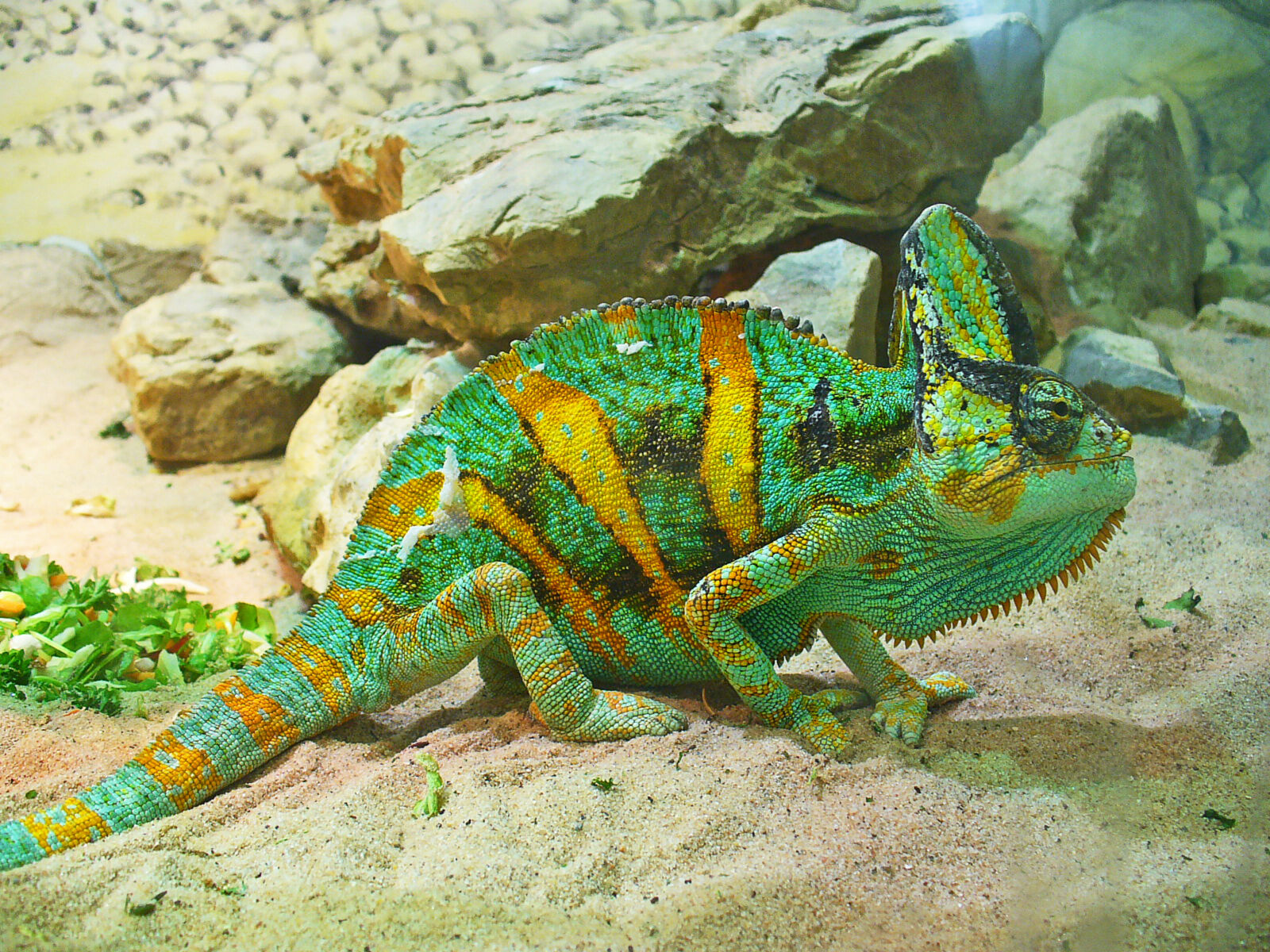
Veiled chameleon
Chamaeleo calyptratus
Color-shifting, independent, look-don't-touch.
Pet trade

Bearded pygmy chameleon
Rieppeleon brevicaudatus
Pet trade

Cape dwarf chameleon
Bradypodion pumilum
Pet trade

Carpet chameleon
Furcifer lateralis
Pet trade

Common chameleon
Chamaeleo chamaeleon
Zoos & aquariums