
Home / Birds / Parrots / Goldie's lorikeet
No federal permit to keepGoldie's lorikeet
Glossoptilus goldiei
Birds › Parrots (Psittaciformes) › Psittaculidae (Old World parrots, lorikeets and lovebirds)
Goldie's lorikeet (Glossoptilus goldiei) is a species of parrot in the family Psittaculidae.
From Wikipedia: Goldie's lorikeet, CC BY-SA 4.0 (excerpt)

Care at a glance
Species-specific values
Values researched for this exact species. Air, surface and water temperatures are listed separately, and each source is kept as published rather than averaged.
| Minimum enclosure | At least 36 inches long, 24 inches wide, and 36 inches high. Source: petmd.com | |
| Warm side air temperature | 65–80 °F Source: petmd.com | |
| Social housing | House lories and lorikeets singly. Source: petmd.com | |
| Substrate | Line the habitat tray with habitat paper or other paper-based bedding. Source: petmd.com | |
| Uvb lighting | Use a bird full-spectrum UV light for 10–12 hours daily, 12–18 inches from the perch. Source: petmd.com | |
| Diet | Feed powdered nectar or pollen substitute or a low-iron pellet diet; offer limited fruits and vegetables and fresh water. Source: petmd.com |
Understanding the animal
About this animal
About this animal
It is the only species placed in the genus Glossoptilus. It is found in forest and woodland in New Guinea, primarily at altitudes of 1,000–2,200 m (3,280–7,220 ft).
From Wikipedia: Goldie's lorikeet, CC BY-SA 4.0 (excerpt)
In the wild
In the wild
| Overview | Goldie's lorikeet (Glossoptilus goldiei) is a species of parrot in the family Psittaculidae. It is the only species placed in the genus Glossoptilus. It is found in forest and woodland in New Guinea, primarily at altitudes of 1000–2200. It is mostly green with yellowish streaks in the chest area, and a red, blue and purple head. — From Wikipedia: Goldie's lorikeet, CC BY-SA 4.0 (excerpt) |
| Appearance and size | Goldie's lorikeet is 19 cm long. It is mainly green, and its underside is yellow-green with dark green longitudinal streaks. It has a red plumage on the crown, which is less extensive in the female. — From Wikipedia: Goldie's lorikeet, CC BY-SA 4.0 (excerpt) |
| History and naming | Goldie's lorikeet was formally described in 1882 by the English ornithologist Richard Bowdler Sharpe from a specimen collected in New Guinea by Andrew Goldie (1840–1891). Sharpe coined the binomial name Trichoglossus goldiei. Goldie's lorikeet was formerly placed in the genus Psitteuteles but was moved to its own genus Glossoptilus following the publication in 2020 of a phylogenetic study of the lorikeets. — From Wikipedia: Goldie's lorikeet, CC BY-SA 4.0 (excerpt) |
Native climate (measured)
Native climate (measured)
| Warm-season highs | about 67°F (up to 75°F in the hottest sampled areas) |
| Cool-season lows | about 47°F (down to 45°F in the coldest sampled areas) |
| Average temperature | 56–64°F across sampled records |
| Relative humidity | 83–85% on average (driest month about 76%) |
| Rainfall | about 2693 mm a year, spread fairly evenly |
Measured at 37 wild occurrence records sampled against WorldClim 2.1 climate data (1970–2000 averages). Air conditions in the range are ecological context, not enclosure settings: microhabitats such as burrows, leaf litter or basking rocks can be cooler, warmer or more humid.
Profile
Profile
Researched for this exact species. Sources are listed under In the wild above.
History
Goldie's lorikeet was formally described in 1882 by the English ornithologist Richard Bowdler Sharpe from a specimen collected in New Guinea by Andrew Goldie (1840–1891). Sharpe coined the binomial name Trichoglossus goldiei. Goldie's lorikeet was formerly placed in the genus Psitteuteles but was moved to its own genus Glossoptilus following the publication in 2020 of a phylogenetic study of the lorikeets.
From Wikipedia: Goldie's lorikeet, CC BY-SA 4.0 (excerpt)
Data and studies
Researched care notes
Researched care notes
Findings checked against veterinary, zoo, welfare, keeper and peer-reviewed sources. Air, basking-surface and water temperatures are kept separate, and where sources disagree both are shown. “Study” notes report what a paper measured, not a universal rule.
Lories And Lorikeets (feeding group)
Researched for this genus; applies to its species unless a species note says otherwise.
- Use a suitable high-quality formulated nectar food as the staple with appropriate fresh foods.1
- Seeds are a minor occasional component for most discussed species, not the principal ration.1
- Provide fresh liquid nectar daily and position food and toys to avoid droppings contamination.1
- Provide activity space and sturdy, varied chewing and foraging toys.1
Sources for this sheet
- 9 CFR 2.1: Animal Welfare Act licensing (USDA) Zoo, university or veterinaryWho needs a USDA license to breed, sell or exhibit animals.
- GBIF Backbone Taxonomy (Global Biodiversity Information Facility) (CC BY 4.0) Peer-reviewed researchInternational scientific taxonomy used here for classification. GBIF Secretariat (2023). GBIF Backbone Taxonomy. Checklist dataset https://doi.org/10.15468/39omei, accessed via GBIF.org.
- Wikipedia (species article) (CC BY-SA 4.0) Community referenceFree encyclopedia; useful overviews with their own citations. Short excerpts are quoted under CC BY-SA 4.0, each credited with a link to its article.
- iNaturalist (captive observations) Community referenceCommunity observation platform run by the California Academy of Sciences and National Geographic; observations marked captive show animals living in homes, zoos and aquariums.
More old world parrots, lorikeets and lovebirds
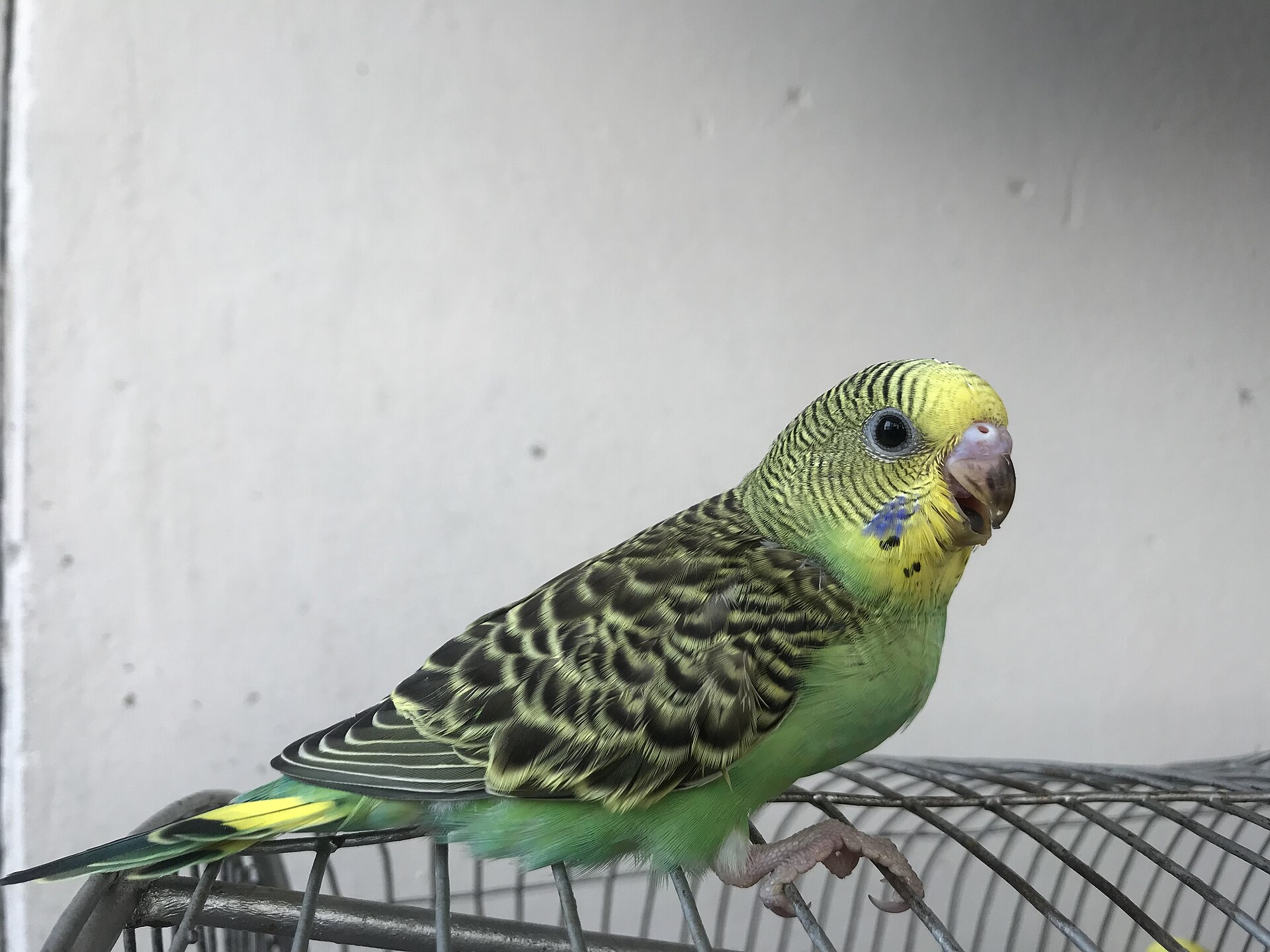
Budgerigar
Melopsittacus undulatus
A small parrot with a big vocabulary.
Pet trade

Alexandrine parakeet
Psittacula eupatria
Pet trade

Black-capped lory
Lorius lory
Pet trade

Black-cheeked lovebird
Agapornis nigrigenis
Pet trade

Blue lorikeet
Vini peruviana
Zoos & aquariums

Blue-crowned hanging parrot
Loriculus galgulus
Zoos & aquariums