
Home / Birds / Parrots / Indian ringneck parakeet
No federal permit to keepIndian ringneck parakeet
Psittacula krameri
Birds › Parrots (Psittaciformes) › Psittaculidae (Old World parrots, lorikeets and lovebirds)
The rose-ringed parakeet (Psittacula krameri), also known as the ring-necked parakeet, or colloquially as the Indian Ringneck, is a medium-sized parrot in the genus Psittacula, of the family Psittaculidae.

Care at a glance
Species-specific values
Values researched for this exact species. Air, surface and water temperatures are listed separately, and each source is kept as published rather than averaged.
| Minimum enclosure | Single bird: at least 75 cm wide × 60 cm deep × 90 cm tall. Source: dubaibirds.ae | |
| Warm side air temperature | 72–82 °F (22–28 °C) Source: dubaibirds.ae | |
| Humidity | 50–60 % Source: dubaibirds.ae | |
| Diet | Daily diet: 60–70% pellets, 25–30% chopped vegetables, 5% fruit, a small daily seed mix, cuttlebone, and sprouted legumes 2–3 times weekly. Source: dubaibirds.ae | |
| Feeding frequency | Offer a small daily seed mix and sprouted legumes 2–3 times a week. Source: dubaibirds.ae | |
| Social housing | Single birds need 2–4 hours daily out of the cage; bonded pairs need less human time and more enrichment. Source: dubaibirds.ae |
Understanding the animal
About this animal
About this animal
It has a disjunct native range in tropical northern Africa and the Indian subcontinent, and is now introduced into many other parts of the world where populations have established themselves having been bred for the exotic pet trade and then escaped. The species is listed as least concern by the International Union for Conservation of Nature (IUCN) because its population appears to be increasing, but its popularity as a pet and unpopularity with farmers have reduced its numbers in some parts of its native range.
From Wikipedia: Rose-ringed parakeet, CC BY-SA 4.0 (excerpt)
In the wild
In the wild
Researched for this exact species, not its family. Wild conditions are context, not enclosure settings.1
| Where it lives | Native populations occupy African savannas and South Asian wooded and cultivated landscapes. Trees provide communal roosts and nesting cavities; introduced populations also use urban parks. |
| Ground it lives on | Mainly arboreal; also visits cultivated ground to feed. |
| Active | Diurnal. |
| Social life | Flocks and communal roosts; monogamous breeding pairs defend nest sites. |
| Wild diet | Seeds and cereal grains, fruit and nectar, with some insects. |
| Behavior to plan for | It uses high cavities for breeding and gathers at shared roosts outside nesting. Competition over cavities can bring it into conflict with other birds. |
Native climate (measured)
Native climate (measured)
| Warm-season highs | about 73°F (up to 74°F in the hottest sampled areas) |
| Cool-season lows | about 33°F (down to 33°F in the coldest sampled areas) |
| Average temperature | 50–51°F across sampled records |
| Relative humidity | 78–79% on average (driest month about 70%) |
| Rainfall | about 782 mm a year, spread fairly evenly |
| Winters | Cool to cold winters (lows around 33°F) in much of its native range. Seasonal slowdown may be relevant, but species-specific biology determines whether brumation or hibernation occurs. |
Measured at 133 wild occurrence records sampled against WorldClim 2.1 climate data (1970–2000 averages). Air conditions in the range are ecological context, not enclosure settings: microhabitats such as burrows, leaf litter or basking rocks can be cooler, warmer or more humid.
Data and studies
The numbers
The numbers
Each bar is what one source reports. Where several sources weigh in, the dashed gold band marks their average.
Maximum recorded lifespan
Longest recorded lifespan reported by each database; typical lifespans are usually shorter. The AnAge record comes from an animal in human care.
Typical adult weight
Average adult body mass in each database (FishBase gives the maximum recorded weight).
Incubation
Female maturity
Veterinary & husbandry research
Veterinary & husbandry research
- Monitoring of free-ranging and captive Psittacula populations in Western Europe for avian bornaviruses, circoviruses and polyomaviruses Kessler S et al., Avian pathology: journal of the W.V.P.A 2020
Peer-reviewed papers that mention this species alongside captivity, zoos, veterinary care or aquaculture. Some cover several species or mention it only in passing, so check the abstract. See all 22 on PubMed → PubMed
Sources for this sheet
- AnAge: The Animal Ageing and Longevity Database (Human Ageing Genomic Resources) (CC BY 3.0) Peer-reviewed researchCurated, referenced longevity and life-history records for thousands of species; maximum lifespans are often from zoo animals.
- Myhrvold et al. (2015). An amniote life-history database. Ecology 96: 3109 Peer-reviewed researchPeer-reviewed compilation of life-history data for over 21,000 birds, mammals and reptiles.
- 9 CFR 2.1: Animal Welfare Act licensing (USDA) Zoo, university or veterinaryWho needs a USDA license to breed, sell or exhibit animals.
- GBIF Backbone Taxonomy (Global Biodiversity Information Facility) (CC BY 4.0) Peer-reviewed researchInternational scientific taxonomy used here for classification. GBIF Secretariat (2023). GBIF Backbone Taxonomy. Checklist dataset https://doi.org/10.15468/39omei, accessed via GBIF.org.
- Species+ (UNEP-WCMC and the CITES Secretariat) Zoo, university or veterinaryThe official database of species listed under CITES. UNEP (2026). The Species+ Website. Nairobi, Kenya. Compiled by UNEP-WCMC, Cambridge, UK. Available at: www.speciesplus.net. [Accessed 04/10/2026].
- Wikipedia (species article) (CC BY-SA 4.0) Community referenceFree encyclopedia; useful overviews with their own citations. Short excerpts are quoted under CC BY-SA 4.0, each credited with a link to its article.
- PubMed (U.S. National Library of Medicine) Peer-reviewed researchIndex of peer-reviewed veterinary, zoo and husbandry research.
- iNaturalist (captive observations) Community referenceCommunity observation platform run by the California Academy of Sciences and National Geographic; observations marked captive show animals living in homes, zoos and aquariums.
More old world parrots, lorikeets and lovebirds
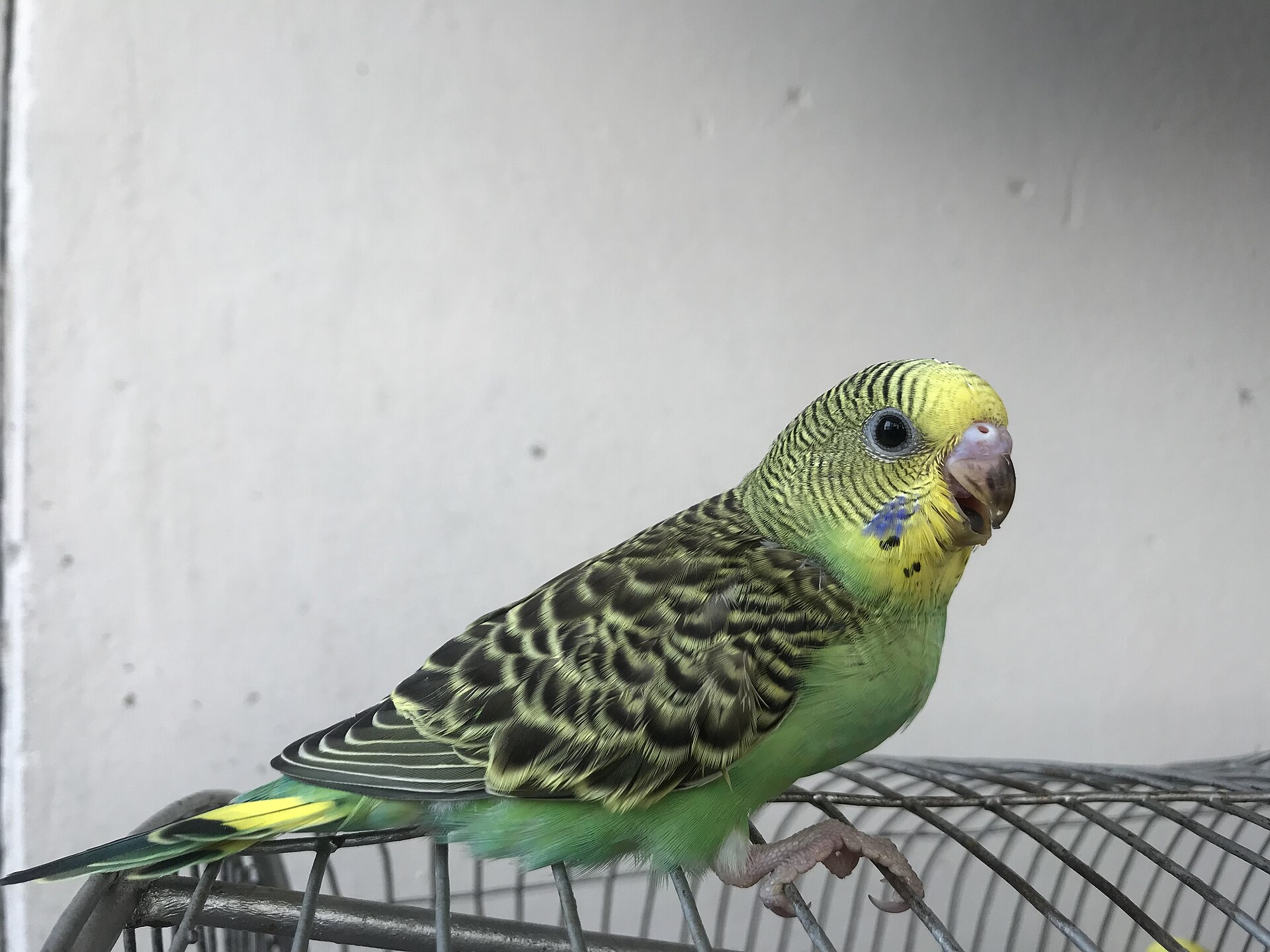
Budgerigar
Melopsittacus undulatus
A small parrot with a big vocabulary.
Pet trade

Alexandrine parakeet
Psittacula eupatria
Pet trade

Black-capped lory
Lorius lory
Pet trade

Black-cheeked lovebird
Agapornis nigrigenis
Pet trade

Blue lorikeet
Vini peruviana
Zoos & aquariums

Blue-crowned hanging parrot
Loriculus galgulus
Zoos & aquariums