
Home / Reptiles / Lizards / Scincidae / Peters' banded skink
No federal permit to keepPeters' banded skink
Scincopus fasciatus
Reptiles › Lizards (Lacertilia) › Scincidae (Skinks)
Peters' banded skink (Scincopus fasciatus) is a species of skink belonging to the monotypic genus Scincopus. These skinks are primarily found in the arid and rocky deserts of North Africa, with their range extending across regions such as Morocco,…
From Wikipedia: Peters's banded skink, CC BY-SA 4.0 (excerpt)

Care at a glance
Species-specific values
Values researched for this exact species. Air, surface and water temperatures are listed separately, and each source is kept as published rather than averaged.
| Minimum enclosure | At least a 40-gallon breeder enclosure with a substrate dam at least 7 inches high. Source: thebiodude.com | |
| Basking surface temperature | 95–100 °F Source: thebiodude.com | |
| Warm side air temperature | 78–80 °F Source: thebiodude.com | |
| Night temperature | 75–80 °F Source: thebiodude.com | |
| Humidity | Keep ambient humidity low and provide a moist retreat; exact levels are not necessary. Source: thebiodude.com | |
| Uvb lighting | Use an Arcadia T5 HO Forest 6% or Zoo Med T5 HO Reptisun 5.0 UVB bulb; place the basking platform 9–11 inches below it over mesh. Source: thebiodude.com | |
| Diet | Feed a variety of gutloaded insects; a little chopped fruit may be offered as a treat. Source: thebiodude.com | |
| Feeding frequency | Offer what the skink can eat in about five minutes; juveniles daily and young adults every 2–3 days. Source: thebiodude.com | |
| Social housing | Groups may be housed if space allows; a 40-gallon enclosure can house up to two, but males should not share an enclosure. Source: thebiodude.com | |
| Substrate | Use at least 6 inches of bioactive-compatible substrate, preferably deeper. Source: thebiodude.com | |
| Minimum enclosure | 24x24x24" preferred; 36x24x24 for a pair or trio. Source: subversionscritters.weebly.com | |
| Humidity | 25 % Source: subversionscritters.weebly.com | |
| Uvb lighting | Most keepers do not believe UVB is necessary since the reptile is nocturnal; this is up for debate. Source: subversionscritters.weebly.com | |
| Diet | Commercial insects, especially crickets, mealworms, and beetles; occasional fruit or vegetables can also be offered. Source: subversionscritters.weebly.com | |
| Feeding frequency | Younger lizards can be fed up to three times a week. Source: subversionscritters.weebly.com | |
| Substrate | Use at least 2 inches of sand; the author plans a 50% aquarium sand and 50% soil mix. Source: subversionscritters.weebly.com |
Understanding the animal
In the wild
In the wild
Researched for this exact species, not its family. Wild conditions are context, not enclosure settings.123
| Where it lives | Occurs patchily across North African and Saharan-Sahelian regions, from the Maghreb and Mauritania east to Sudan. Uses sandy arid habitats and some Sahelian savanna, often sheltering near low shrubs or rock formations. |
| Ground it lives on | loose sandy substrate with shrubs and sheltered rock edges |
| Climate | Arid, strongly seasonal conditions in northern sandy habitats; the range also includes Sahelian-Sudanian savanna. Verified species-specific wild temperature and relative-humidity ranges were not found. |
| Active | Nocturnal; spends much of its time beneath sandy substrate. |
| Social life | Probably territorial during the mating season according to field observations summarized in the regional account; permanent group living is not established. |
| Wild diet | Mainly invertebrates, with occasional Scincus skinks. Young Retama raetam pods have been observed being eaten; the importance of plant food remains uncertain. |
| Behavior to plan for | A fast fossorial skink that travels through sand and makes nighttime excursions, sometimes returning to the same refuge after moving more than 650 feet (200 m). Can detect prey-associated ground vibrations. |
Native climate (measured)
Native climate (measured)
| Warm-season highs | about 105°F (up to 106°F in the hottest sampled areas) |
| Cool-season lows | about 57°F (down to 42°F in the coldest sampled areas) |
| Average temperature | 71–85°F across sampled records |
| Relative humidity | 33–46% on average (driest month about 17%) |
| Rainfall | about 206 mm a year, with strong wet and dry seasons |
Measured at 22 wild occurrence records sampled against WorldClim 2.1 climate data (1970–2000 averages). Air conditions in the range are ecological context, not enclosure settings: microhabitats such as burrows, leaf litter or basking rocks can be cooler, warmer or more humid.
Profile
Profile
Researched for this exact species. Sources are listed under In the wild above.
History
The Reptile Database lists several type specimens and historical names associated with the taxon. Its type locality is in Algeria.
Data and studies
The numbers
The numbers
Each bar is what one source reports. Where several sources weigh in, the dashed gold band marks their average.
Typical adult weight
Average adult body mass in each database (FishBase gives the maximum recorded weight).
Adult snout-to-vent length
Body length without the tail.
Sources for this sheet
- Myhrvold et al. (2015). An amniote life-history database. Ecology 96: 3109 Peer-reviewed researchPeer-reviewed compilation of life-history data for over 21,000 birds, mammals and reptiles.
- Clint's Reptiles (YouTube): Peter's Banded Skink, The Best Pet Lizard? Expert educator & keeperClint Laidlaw, PhD in Biology Education and MS in Evolutionary Ecology; owner of Clint's Reptile Room and a longtime keeper. His "Best Pet?" series reviews each species' care in depth.
- The Reptile Database Peer-reviewed researchScientist-curated catalog of every reptile species, with taxonomy and literature.
- GBIF Backbone Taxonomy (Global Biodiversity Information Facility) (CC BY 4.0) Peer-reviewed researchInternational scientific taxonomy used here for classification. GBIF Secretariat (2023). GBIF Backbone Taxonomy. Checklist dataset https://doi.org/10.15468/39omei, accessed via GBIF.org.
- Wikipedia (species article) (CC BY-SA 4.0) Community referenceFree encyclopedia; useful overviews with their own citations. Short excerpts are quoted under CC BY-SA 4.0, each credited with a link to its article.
- iNaturalist (captive observations) Community referenceCommunity observation platform run by the California Academy of Sciences and National Geographic; observations marked captive show animals living in homes, zoos and aquariums.
More skinks
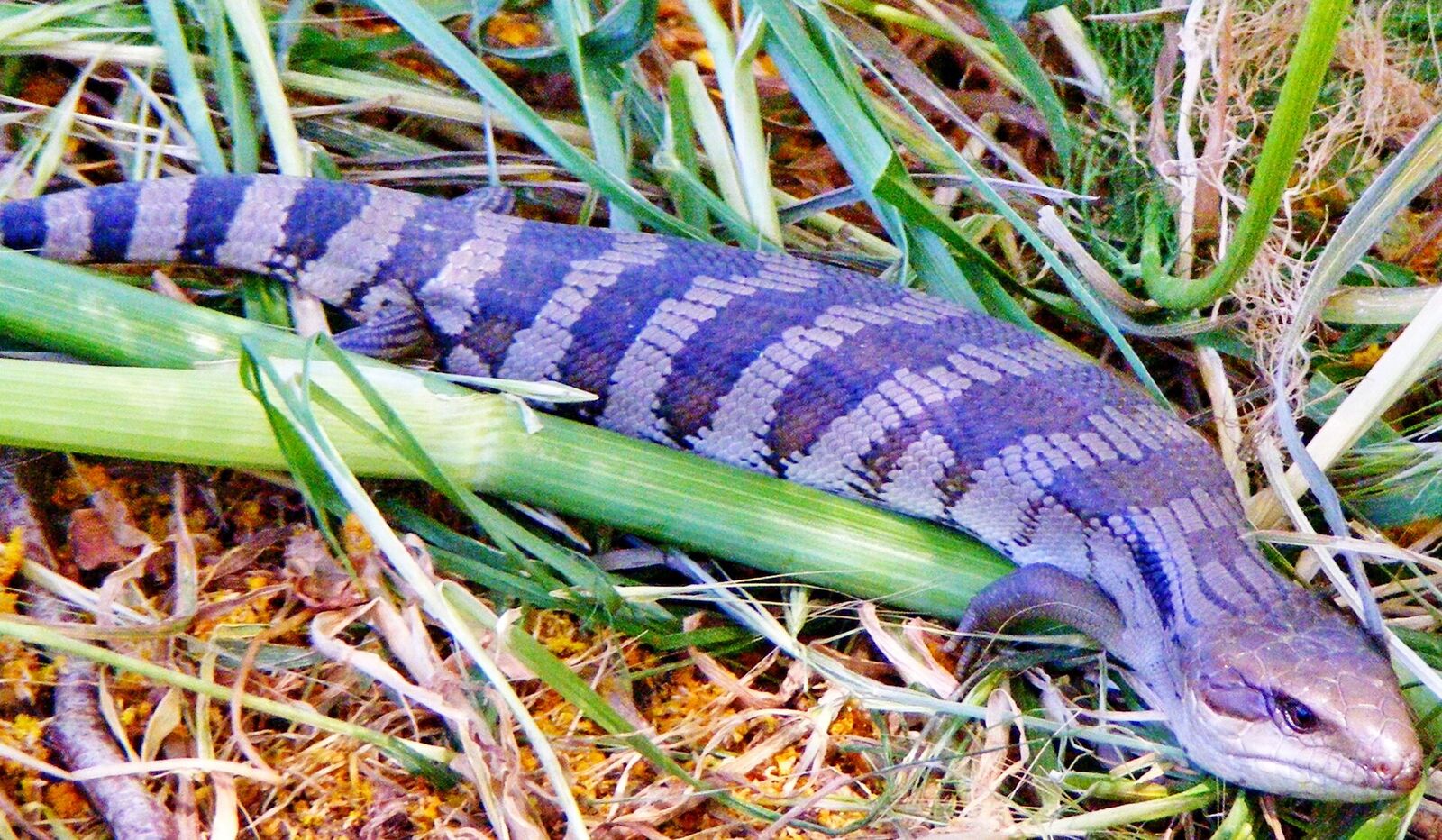
Common blue-tongued skink
Tiliqua scincoides
Docile, chunky and flashes a blue tongue.
Pet trade

Blotched blue-tongued skink
Tiliqua nigrolutea
Pet trade

Centralian blue-tongued skink
Tiliqua multifasciata
Pet trade

Cunningham's skink
Egernia cunninghami
Pet trade

East Indian brown mabuya
Eutropis multifasciata
Pet trade

Eastern Pilbara spiny-tailed skink
Egernia epsisolus
Pet trade