
Home / Birds / Parrots / Red-crowned parakeet (kakariki)
Federal restrictions applyRed-crowned parakeet (kakariki)
Cyanoramphus novaezelandiae
Birds › Parrots (Psittaciformes) › Psittaculidae (Old World parrots, lorikeets and lovebirds)
The red-crowned parakeet (Cyanoramphus novaezelandiae), also known as red-fronted parakeet and by its Māori name of kākāriki, is a small parrot from New Zealand.
From Wikipedia: Red-crowned parakeet, CC BY-SA 4.0 (excerpt)

Care at a glance
Species-specific values
Values researched for this exact species. Air, surface and water temperatures are listed separately, and each source is kept as published rather than averaged.
| Minimum enclosure | Single bird: 90 × 60 × 90 cm; pair: at least 120 × 60 × 100 cm. Source: nestbook.org | |
| Diet | Use a small parakeet seed mix with pellets, plus fresh foods. Source: nestbook.org | |
| Feeding frequency | Offer daily portions of fresh vegetables and fruits. Source: nestbook.org | |
| Social housing | A single bird can thrive with several hours of daily interaction; otherwise a bonded pair is kinder. Source: nestbook.org | |
| Substrate | Suitable floor coverings include coarse sand, natural soil, or disinfectable plain concrete. Source: nestbook.org | |
| Minimum enclosure | Very active birds need at least 90cm L x 60cm W x 90cm H; bigger is better. Source: christchurchbirdclub.co.nz | |
| Warm side air temperature | 64–77 °F (18–25 °C) Source: christchurchbirdclub.co.nz | |
| Diet | Feed high-quality pellets with fresh vegetables, some fruit, and a small amount of seed mix. Source: christchurchbirdclub.co.nz | |
| Social housing | They need interaction with their owner or a Kakariki companion. Source: christchurchbirdclub.co.nz |
Warnings
Understanding the animal
About this animal
About this animal
It is characterised by its bright green plumage and the red pattern on its head. This versatile bird can feed on a variety food items and can be found in many habitat types.
From Wikipedia: Red-crowned parakeet, CC BY-SA 4.0 (excerpt)
In the wild
In the wild
| Overview | The red-crowned parakeet (Cyanoramphus novaezelandiae), also known as red-fronted parakeet and by its Māori name of kākāriki, is a small parrot from New Zealand. It is characterised by its bright green plumage and the red pattern on its head. This versatile bird can feed on a variety food items and can be found in many habitat types. It used to be classified as near threatened as invasive predators had pushed it out of its historical range but it is now at least concern. — From Wikipedia: Red-crowned parakeet, CC BY-SA 4.0 (excerpt) |
| Where it lives | Red-crowned parakeets can live in a wide variety of habitats including dense temperate rainforests, coastal forests, scrubland, forest edges and open areas. When their range overlaps with Yellow-crowned parakeets, red-crowned parakeets favour forest edges and open areas. — From Wikipedia: Red-crowned parakeet, CC BY-SA 4.0 (excerpt) |
| Wild diet | Red-crowned parakeets are highly generalised and diverse when it comes to feeding. They consume flowers, fruits, seeds, leaves and buds from a variety of plants. They also complement their diet with a few invertebrates such as small aphids and can be fed mealworms. — From Wikipedia: Red-crowned parakeet, CC BY-SA 4.0 (excerpt) |
| Reproduction | Red-crowned parakeets form monogamous pair bonds. Couples may or may not stay together after a breeding season, possibly depending on the success of their nesting. Courtship feeding and other pair bond behaviours begin to take place about two months before laying the eggs, in mid-October. — From Wikipedia: Red-crowned parakeet, CC BY-SA 4.0 (excerpt) |
| History and naming | The red-crowned parakeet is a member of the order Psittaciformes, also known as the parrots. It is part of the genus Cyanoramphus, which currently includes 12 species of parakeets. C. novaezelandiae was once lumped with several other parrots from New Zealand's outlying islands, New Caledonia and Norfolk Island, but these have now been afforded full species status. — From Wikipedia: Red-crowned parakeet, CC BY-SA 4.0 (excerpt) |
| Conservation | The red-crowned parakeet is absolutely protected under New Zealand's Wildlife Act 1953. — From Wikipedia: Red-crowned parakeet, CC BY-SA 4.0 (excerpt) |
Native climate (measured)
Native climate (measured)
| Warm-season highs | about 70°F (up to 74°F in the hottest sampled areas) |
| Cool-season lows | about 40°F (down to 39°F in the coldest sampled areas) |
| Average temperature | 50–60°F across sampled records |
| Relative humidity | 78% on average (driest month about 75%) |
| Rainfall | about 1361 mm a year, spread fairly evenly |
| Winters | Cool to cold winters (lows around 40°F) in much of its native range. Seasonal slowdown may be relevant, but species-specific biology determines whether brumation or hibernation occurs. |
Measured at 105 wild occurrence records sampled against WorldClim 2.1 climate data (1970–2000 averages). Air conditions in the range are ecological context, not enclosure settings: microhabitats such as burrows, leaf litter or basking rocks can be cooler, warmer or more humid.
Profile
Profile
Researched for this exact species. Sources are listed under In the wild above.
History
The red-crowned parakeet is a member of the order Psittaciformes, also known as the parrots. It is part of the genus Cyanoramphus, which currently includes 12 species of parakeets. C. novaezelandiae was once lumped with several other parrots from New Zealand's outlying islands, New Caledonia and Norfolk Island, but these have now been afforded full species status.
From Wikipedia: Red-crowned parakeet, CC BY-SA 4.0 (excerpt)
Data and studies
The numbers
The numbers
Each bar is what one source reports. Where several sources weigh in, the dashed gold band marks their average.
Maximum recorded lifespan
Longest recorded lifespan reported by each database; typical lifespans are usually shorter. The AnAge record comes from an animal in human care.
Typical adult weight
Average adult body mass in each database (FishBase gives the maximum recorded weight).
Veterinary & husbandry research
Veterinary & husbandry research
- Developmental morphology of Knemidokoptes pilae on an infested red-crowned parakeet (Cyanoramphus novaezelandiae) Kim KT et al., The Journal of veterinary medical science 2016
- A new isolate of beak and feather disease virus from endemic wild red-fronted parakeets (Cyanoramphus novaezelandiae) in New Zealand Ortiz-Catedral L et al., Archives of virology 2010
Peer-reviewed papers that mention this species alongside captivity, zoos, veterinary care or aquaculture. Some cover several species or mention it only in passing, so check the abstract. See all 5 on PubMed → PubMed
Sources for this sheet
- AnAge: The Animal Ageing and Longevity Database (Human Ageing Genomic Resources) (CC BY 3.0) Peer-reviewed researchCurated, referenced longevity and life-history records for thousands of species; maximum lifespans are often from zoo animals.
- Myhrvold et al. (2015). An amniote life-history database. Ecology 96: 3109 Peer-reviewed researchPeer-reviewed compilation of life-history data for over 21,000 birds, mammals and reptiles.
- Species+ (UNEP-WCMC and the CITES Secretariat) Zoo, university or veterinaryThe official database of species listed under CITES. UNEP (2026). The Species+ Website. Nairobi, Kenya. Compiled by UNEP-WCMC, Cambridge, UK. Available at: www.speciesplus.net. [Accessed 04/10/2026].
- USFWS International Affairs: CITES Zoo, university or veterinaryFederal agency that issues CITES permits.
- 9 CFR 2.1: Animal Welfare Act licensing (USDA) Zoo, university or veterinaryWho needs a USDA license to breed, sell or exhibit animals.
- GBIF Backbone Taxonomy (Global Biodiversity Information Facility) (CC BY 4.0) Peer-reviewed researchInternational scientific taxonomy used here for classification. GBIF Secretariat (2023). GBIF Backbone Taxonomy. Checklist dataset https://doi.org/10.15468/39omei, accessed via GBIF.org.
- Wikipedia (species article) (CC BY-SA 4.0) Community referenceFree encyclopedia; useful overviews with their own citations. Short excerpts are quoted under CC BY-SA 4.0, each credited with a link to its article.
- PubMed (U.S. National Library of Medicine) Peer-reviewed researchIndex of peer-reviewed veterinary, zoo and husbandry research.
- iNaturalist (captive observations) Community referenceCommunity observation platform run by the California Academy of Sciences and National Geographic; observations marked captive show animals living in homes, zoos and aquariums.
More old world parrots, lorikeets and lovebirds
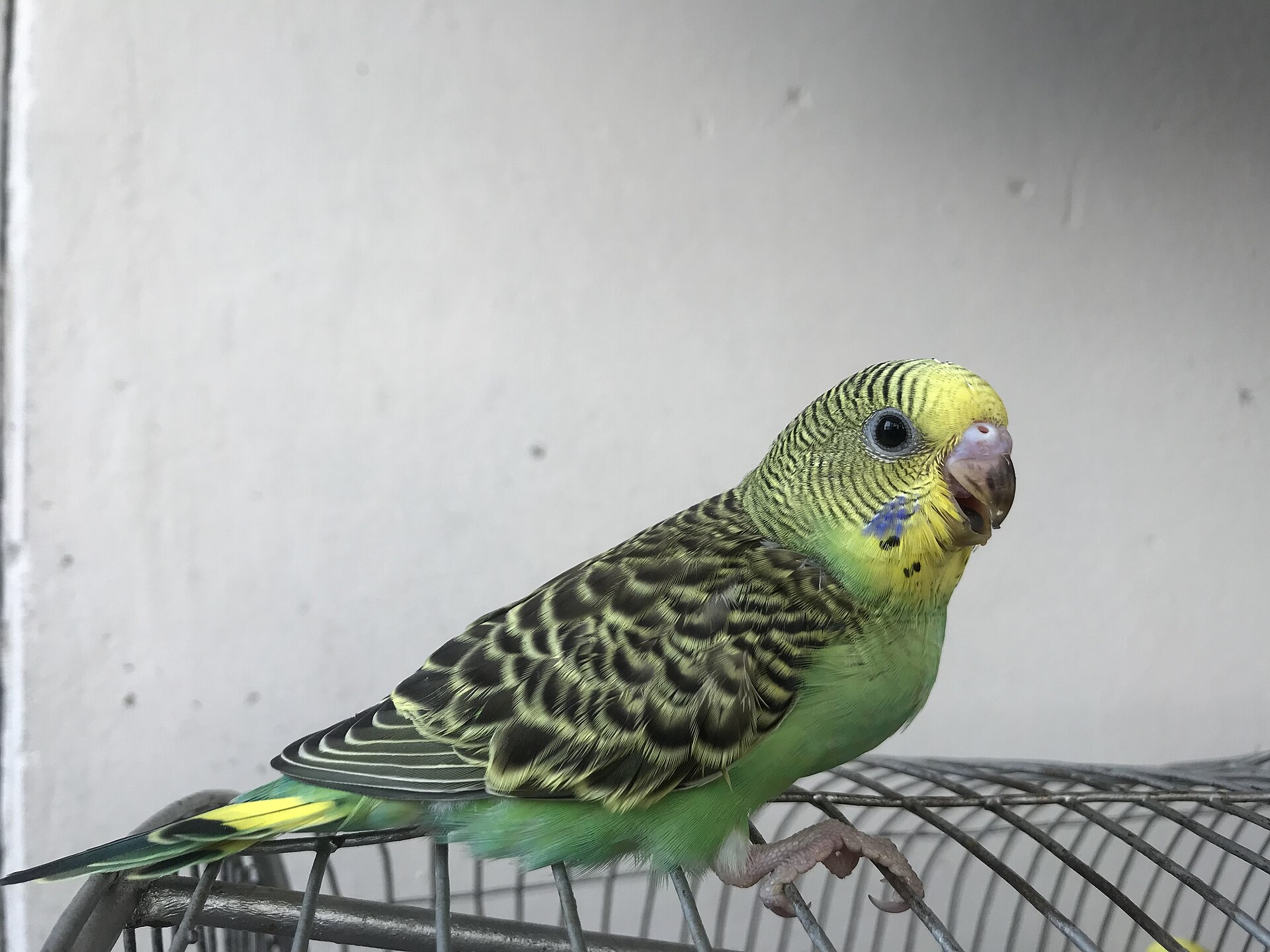
Budgerigar
Melopsittacus undulatus
A small parrot with a big vocabulary.
Pet trade

Alexandrine parakeet
Psittacula eupatria
Pet trade

Black-capped lory
Lorius lory
Pet trade

Black-cheeked lovebird
Agapornis nigrigenis
Pet trade

Blue lorikeet
Vini peruviana
Zoos & aquariums

Blue-crowned hanging parrot
Loriculus galgulus
Zoos & aquariums