
Home / Birds / Parrots / Red-headed lovebird
Some federal rules applyRed-headed lovebird
Agapornis pullarius
Birds › Parrots (Psittaciformes) › Psittaculidae (Old World parrots, lorikeets and lovebirds)
The red-headed lovebird (Agapornis pullarius), also known as the red-faced lovebird, is a member of the genus Agapornis, a group commonly known as lovebirds.
From Wikipedia: Red-headed lovebird, CC BY-SA 4.0 (excerpt)

Care at a glance
Species-specific values
Values researched for this exact species. Air, surface and water temperatures are listed separately, and each source is kept as published rather than averaged.
| Minimum enclosure | For a single pair, a flight cage of at least 90 × 45 × 90 cm (L×W×H) is the absolute minimum. Source: nestbook.org | |
| Minimum enclosure | An outdoor or indoor aviary of 2 m × 1 m × 2 m or larger is far preferable. Source: nestbook.org | |
| Night temperature | 59 °F (at least 15 °C) Source: nestbook.org | |
| Uvb lighting | Lighting of 12–14 hours per day supports normal activity and breeding cycles. Source: nestbook.org | |
| Warm side air temperature | 64–82 °F (18–28 °C) Source: nestbook.org | |
| Diet | Base the diet on a small-parrot seed mix; formulated pellets can replace or supplement 30–50% of the seed ration, alongside fresh foods. Source: nestbook.org | |
| Feeding frequency | Offer a wide variety of fresh foods daily. Source: nestbook.org | |
| Social housing | A bonded pair in a spacious aviary is the ideal setup. Source: nestbook.org | |
| Substrate | 60–70 % Source: nestbook.org |
Warnings
Understanding the animal
About this animal
About this animal
Like other lovebirds, it is native to Africa.
From Wikipedia: Red-headed lovebird, CC BY-SA 4.0 (excerpt)
In the wild
In the wild
| Overview | The red-headed lovebird (Agapornis pullarius), also known as the red-faced lovebird, is a member of the genus Agapornis, a group commonly known as lovebirds. Like other lovebirds, it is native to Africa. — From Wikipedia: Red-headed lovebird, CC BY-SA 4.0 (excerpt) |
| Where it lives | It has a patchy distribution across the African tropical rainforest. — From Wikipedia: Red-headed lovebird, CC BY-SA 4.0 (excerpt) |
| Reproduction | It makes its nest in a termites nest usually in a tree or sometimes on the ground. To make a nest the female digs a tunnel up to a length of 30 cm in the termites nest in a colony with other lovebirds. — From Wikipedia: Red-headed lovebird, CC BY-SA 4.0 (excerpt) |
| Appearance and size | The red-headed lovebird is a 15 cm (6 inches) long, mostly green parrot. It has a well demarcated red area on its head extending from the top of the beak, over the forehead to mid-crown, and extending to the left and right up to the eyelid margins. The underside of the wings is a lighter green. — From Wikipedia: Red-headed lovebird, CC BY-SA 4.0 (excerpt) |
| History and naming | The red-headed lovebird was formally described in 1758 by the Swedish naturalist Carl Linnaeus in the tenth edition of his Systema Naturae. He placed it with all the other parrots in the genus Psittacus and coined the binomial name Psittacus pullarius. The type locality is Ghana. — From Wikipedia: Red-headed lovebird, CC BY-SA 4.0 (excerpt) |
Native climate (measured)
Native climate (measured)
| Warm-season highs | about 81°F (up to 89°F in the hottest sampled areas) |
| Cool-season lows | about 61°F (down to 57°F in the coldest sampled areas) |
| Average temperature | 69–74°F across sampled records |
| Relative humidity | 74–79% on average (driest month about 71%) |
| Rainfall | about 1180 mm a year |
Measured at 77 wild occurrence records sampled against WorldClim 2.1 climate data (1970–2000 averages). Air conditions in the range are ecological context, not enclosure settings: microhabitats such as burrows, leaf litter or basking rocks can be cooler, warmer or more humid.
Profile
Profile
Researched for this exact species. Sources are listed under In the wild above.
History
The red-headed lovebird was formally described in 1758 by the Swedish naturalist Carl Linnaeus in the tenth edition of his Systema Naturae. He placed it with all the other parrots in the genus Psittacus and coined the binomial name Psittacus pullarius. The type locality is Ghana.
From Wikipedia: Red-headed lovebird, CC BY-SA 4.0 (excerpt)
Data and studies
Researched care notes
Researched care notes
Findings checked against veterinary, zoo, welfare, keeper and peer-reviewed sources. Air, basking-surface and water temperatures are kept separate, and where sources disagree both are shown. “Study” notes report what a paper measured, not a universal rule.
Budgerigars, Cockatiels, And Lovebirds (nutrition module, not completed species sheets)
Researched for this genus; applies to its species unless a species note says otherwise.
- MSD discusses a mixed formulated-food/seed strategy for these small parrots, differing from its large-parrot percentages.1
- Offered food and selected food may differ. Measure actual consumption during diet changes.1
Lovebirds
Researched for this genus; applies to its species unless a species note says otherwise.
- Lovebirds can be territorial and may pursue larger animals; social boldness does not establish safe contact with other birds, dogs or cats.2
Budgerigar, Cockatiel And Lovebirds (Shared reproductive additions)
Researched for this genus; applies to its species unless a species note says otherwise.
- Persistent laying can deplete calcium and lead to egg binding or other reproductive disease; it requires assessment beyond simply replacing a cuttlebone.3
- For birds laying excessively, veterinary management can include reducing reproductive cues such as nest boxes, extended daylight and sexualized owner interactions.3
- A weak or nonperching hen with straining or breathing difficulty may have egg binding and needs urgent veterinary attention.3
The numbers
The numbers
Each bar is what one source reports. Where several sources weigh in, the dashed gold band marks their average.
Maximum recorded lifespan
Longest recorded lifespan reported by each database; typical lifespans are usually shorter. The AnAge record comes from an animal in human care.
Typical adult weight
Average adult body mass in each database (FishBase gives the maximum recorded weight).
Incubation
Female maturity
Sources for this sheet
- AnAge: The Animal Ageing and Longevity Database (Human Ageing Genomic Resources) (CC BY 3.0) Peer-reviewed researchCurated, referenced longevity and life-history records for thousands of species; maximum lifespans are often from zoo animals.
- Myhrvold et al. (2015). An amniote life-history database. Ecology 96: 3109 Peer-reviewed researchPeer-reviewed compilation of life-history data for over 21,000 birds, mammals and reptiles.
- Species+ (UNEP-WCMC and the CITES Secretariat) Zoo, university or veterinaryThe official database of species listed under CITES. UNEP (2026). The Species+ Website. Nairobi, Kenya. Compiled by UNEP-WCMC, Cambridge, UK. Available at: www.speciesplus.net. [Accessed 04/10/2026].
- USFWS International Affairs: CITES Zoo, university or veterinaryFederal agency that issues CITES permits.
- 9 CFR 2.1: Animal Welfare Act licensing (USDA) Zoo, university or veterinaryWho needs a USDA license to breed, sell or exhibit animals.
- Wikipedia (species article) (CC BY-SA 4.0) Community referenceFree encyclopedia; useful overviews with their own citations. Short excerpts are quoted under CC BY-SA 4.0, each credited with a link to its article.
- iNaturalist (captive observations) Community referenceCommunity observation platform run by the California Academy of Sciences and National Geographic; observations marked captive show animals living in homes, zoos and aquariums.
More old world parrots, lorikeets and lovebirds
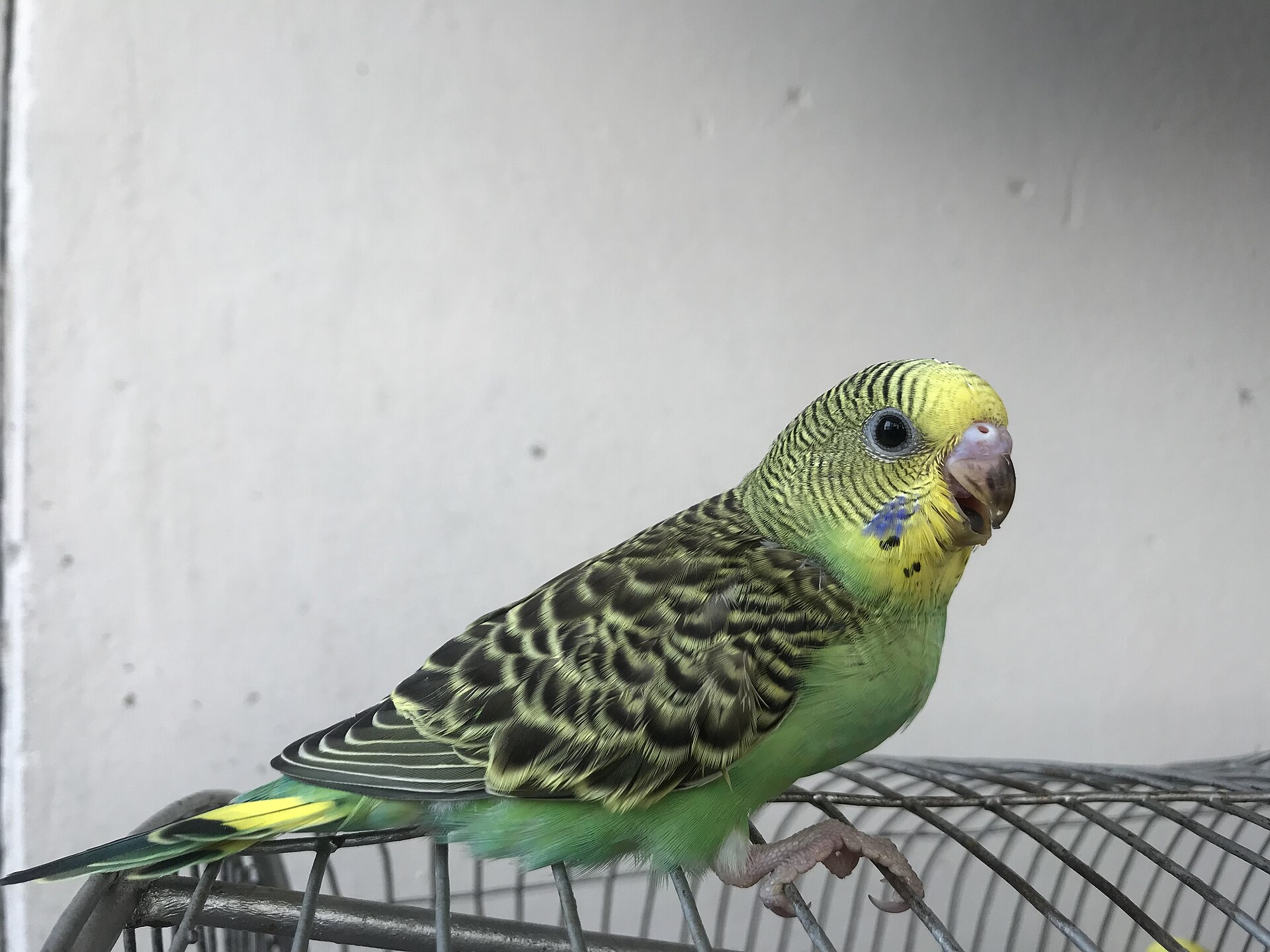
Budgerigar
Melopsittacus undulatus
A small parrot with a big vocabulary.
Pet trade

Alexandrine parakeet
Psittacula eupatria
Pet trade

Black-capped lory
Lorius lory
Pet trade

Black-cheeked lovebird
Agapornis nigrigenis
Pet trade

Blue lorikeet
Vini peruviana
Zoos & aquariums

Blue-crowned hanging parrot
Loriculus galgulus
Zoos & aquariums