
Home / Birds / Parrots / Red-rumped parrot
Some federal rules applyRed-rumped parrot
Psephotus haematonotus
Birds › Parrots (Psittaciformes) › Psittaculidae (Old World parrots, lorikeets and lovebirds)
The red-rumped parrot (Psephotus haematonotus), also known as the red-backed parrot or grass parrot, is a medium-sized broad-tailed parrot endemic to open woodland in south-eastern Australia, particularly in the Murray-Darling Basin.
From Wikipedia: Red-rumped parrot, CC BY-SA 4.0 (excerpt)

Care at a glance
Species-specific values
Values researched for this exact species. Air, surface and water temperatures are listed separately, and each source is kept as published rather than averaged.
| Diet | Feed a standard base diet of grass parakeet or small parrot seed. Source: nestbook.org | |
| Feeding frequency | Offer varied fresh foods daily. Source: nestbook.org | |
| Social housing | Keep mates in the same enclosure for at least 4–6 weeks prior to breeding. Source: nestbook.org | |
| Substrate | Use dry, untreated pine or beech shavings in the nest box. Source: nestbook.org |
Understanding the animal
About this animal
About this animal
It is a highly sexually dimorphic species, with the adult female mainly being a greyish olive-green with lighter underparts and the adult male predominantly being a brightly coloured green and gold with various shades of blue on the wings. Only the adult male possesses the red rump that gives the species its common name.
From Wikipedia: Red-rumped parrot, CC BY-SA 4.0 (excerpt)
In the wild
In the wild
| Overview | The red-rumped parrot (Psephotus haematonotus), also known as the red-backed parrot or grass parrot, is a medium-sized broad-tailed parrot endemic to open woodland in south-eastern Australia, particularly in the Murray-Darling Basin. It is a highly sexually dimorphic species, with the adult female mainly being a greyish olive-green with lighter underparts and the adult male predominantly being a brightly coloured green and gold with various shades of blue on the wings. Only the adult male possesses the red rump that gives the species its common name. — From Wikipedia: Red-rumped parrot, CC BY-SA 4.0 (excerpt) |
| Where it lives | Red-rumped parrots are widely distributed throughout lightly timbered plains, open woodland and other grassy habitats in south-eastern Australia below 1000 m. Their range encompasses most of New South Wales and Victoria, as well as parts of southern Queensland and eastern South Australia. They avoid the coast and the wetter, more heavily wooded areas. — From Wikipedia: Red-rumped parrot, CC BY-SA 4.0 (excerpt) |
| Wild diet | The red-rumped parrot's diet primarily consists of seeds and leaves of grasses and other herbaceous plants, both native and introduced. They may occasionally feed on small fruits, shoots and flowers. They predominantly feed on the ground in pairs or small flocks, and may be seen feeding with other seed-eating parrots such as galahs and eastern rosellas. — From Wikipedia: Red-rumped parrot, CC BY-SA 4.0 (excerpt) |
| Behavior | Red-rumped parrots are non-migratory, with local movements after the breeding season. They can be found in pairs or flocks, occasionally reaching numbers of up to 100 or more birds. They are most crepuscular, active during dawn and dusk and avoiding activity during the hottest times of day. — From Wikipedia: Red-rumped parrot, CC BY-SA 4.0 (excerpt) |
| Reproduction | Like many parrots, red-rumped parrots nest in tree hollows or similar places, including fenceposts and stumps. They lay 4-6 white eggs around 2 or so centimetres. Breeding usually takes place in spring (September–November); however, in the dryer inland areas, breeding can occur at any time of year in response to rainfall. — From Wikipedia: Red-rumped parrot, CC BY-SA 4.0 (excerpt) |
| Appearance and size | Red-rumped parrots are slim, moderate-sized parrots measuring approximately 28 cm in length and weighing between 45 and 77 grams. The adult male's plumage is mainly a bright emerald-green with yellow underparts. The mantle, upper back and scapulars are a dull green-blue. — From Wikipedia: Red-rumped parrot, CC BY-SA 4.0 (excerpt) |
| History and naming | The red-rumped parrot was described by John Gould in 1838 as Platycercus haematonotus from a specimen collected in New South Wales. He felt it was intermediate between the genera Platycercus and the now obsolete genus Nanodes, placing it in the former. He gave it its species name on account of its red rump. — From Wikipedia: Red-rumped parrot, CC BY-SA 4.0 (excerpt) |
| Conservation | Currently, the red-rumped parrot is listed as Least Concern on the IUCN Red List of Threatened Species, and does not appear on the EPBC Act List of Threatened Fauna. Its population size has not been estimated, however it is believed to be increasing, and the species is reported to be common throughout its range. — From Wikipedia: Red-rumped parrot, CC BY-SA 4.0 (excerpt) |
Native climate (measured)
Native climate (measured)
| Warm-season highs | about 82°F (up to 88°F in the hottest sampled areas) |
| Cool-season lows | about 40°F (down to 32°F in the coldest sampled areas) |
| Average temperature | 56–63°F across sampled records |
| Relative humidity | 63–69% on average (driest month about 58%) |
| Rainfall | about 646 mm a year, spread fairly evenly |
| Winters | Cool to cold winters (lows around 40°F) in much of its native range. Seasonal slowdown may be relevant, but species-specific biology determines whether brumation or hibernation occurs. |
Measured at 127 wild occurrence records sampled against WorldClim 2.1 climate data (1970–2000 averages). Air conditions in the range are ecological context, not enclosure settings: microhabitats such as burrows, leaf litter or basking rocks can be cooler, warmer or more humid.
Profile
Profile
Researched for this exact species. Sources are listed under In the wild above.
History
The red-rumped parrot was described by John Gould in 1838 as Platycercus haematonotus from a specimen collected in New South Wales. He felt it was intermediate between the genera Platycercus and the now obsolete genus Nanodes, placing it in the former. He gave it its species name on account of its red rump.
From Wikipedia: Red-rumped parrot, CC BY-SA 4.0 (excerpt)
Data and studies
The numbers
The numbers
Each bar is what one source reports. Where several sources weigh in, the dashed gold band marks their average.
Maximum recorded lifespan
Longest recorded lifespan reported by each database; typical lifespans are usually shorter. The AnAge record comes from an animal in human care.
Typical adult weight
Average adult body mass in each database (FishBase gives the maximum recorded weight).
Incubation
Female maturity
Veterinary & husbandry research
Veterinary & husbandry research
- Dispharynx nasuta (Nematoda: Acuarioidea: Acuariidae) infestation in exotic red-rumped parrots (Psephotus haematonotus) in captivity in the State of Michoacan, Mexico Hernandez-Urraca V et al., Veterinary parasitology, regional studies and reports 2022
Peer-reviewed papers that mention this species alongside captivity, zoos, veterinary care or aquaculture. Some cover several species or mention it only in passing, so check the abstract. PubMed
Sources for this sheet
- AnAge: The Animal Ageing and Longevity Database (Human Ageing Genomic Resources) (CC BY 3.0) Peer-reviewed researchCurated, referenced longevity and life-history records for thousands of species; maximum lifespans are often from zoo animals.
- Myhrvold et al. (2015). An amniote life-history database. Ecology 96: 3109 Peer-reviewed researchPeer-reviewed compilation of life-history data for over 21,000 birds, mammals and reptiles.
- Species+ (UNEP-WCMC and the CITES Secretariat) Zoo, university or veterinaryThe official database of species listed under CITES. UNEP (2026). The Species+ Website. Nairobi, Kenya. Compiled by UNEP-WCMC, Cambridge, UK. Available at: www.speciesplus.net. [Accessed 04/10/2026].
- USFWS International Affairs: CITES Zoo, university or veterinaryFederal agency that issues CITES permits.
- 9 CFR 2.1: Animal Welfare Act licensing (USDA) Zoo, university or veterinaryWho needs a USDA license to breed, sell or exhibit animals.
- GBIF Backbone Taxonomy (Global Biodiversity Information Facility) (CC BY 4.0) Peer-reviewed researchInternational scientific taxonomy used here for classification. GBIF Secretariat (2023). GBIF Backbone Taxonomy. Checklist dataset https://doi.org/10.15468/39omei, accessed via GBIF.org.
- Wikipedia (species article) (CC BY-SA 4.0) Community referenceFree encyclopedia; useful overviews with their own citations. Short excerpts are quoted under CC BY-SA 4.0, each credited with a link to its article.
- PubMed (U.S. National Library of Medicine) Peer-reviewed researchIndex of peer-reviewed veterinary, zoo and husbandry research.
- iNaturalist (captive observations) Community referenceCommunity observation platform run by the California Academy of Sciences and National Geographic; observations marked captive show animals living in homes, zoos and aquariums.
More old world parrots, lorikeets and lovebirds
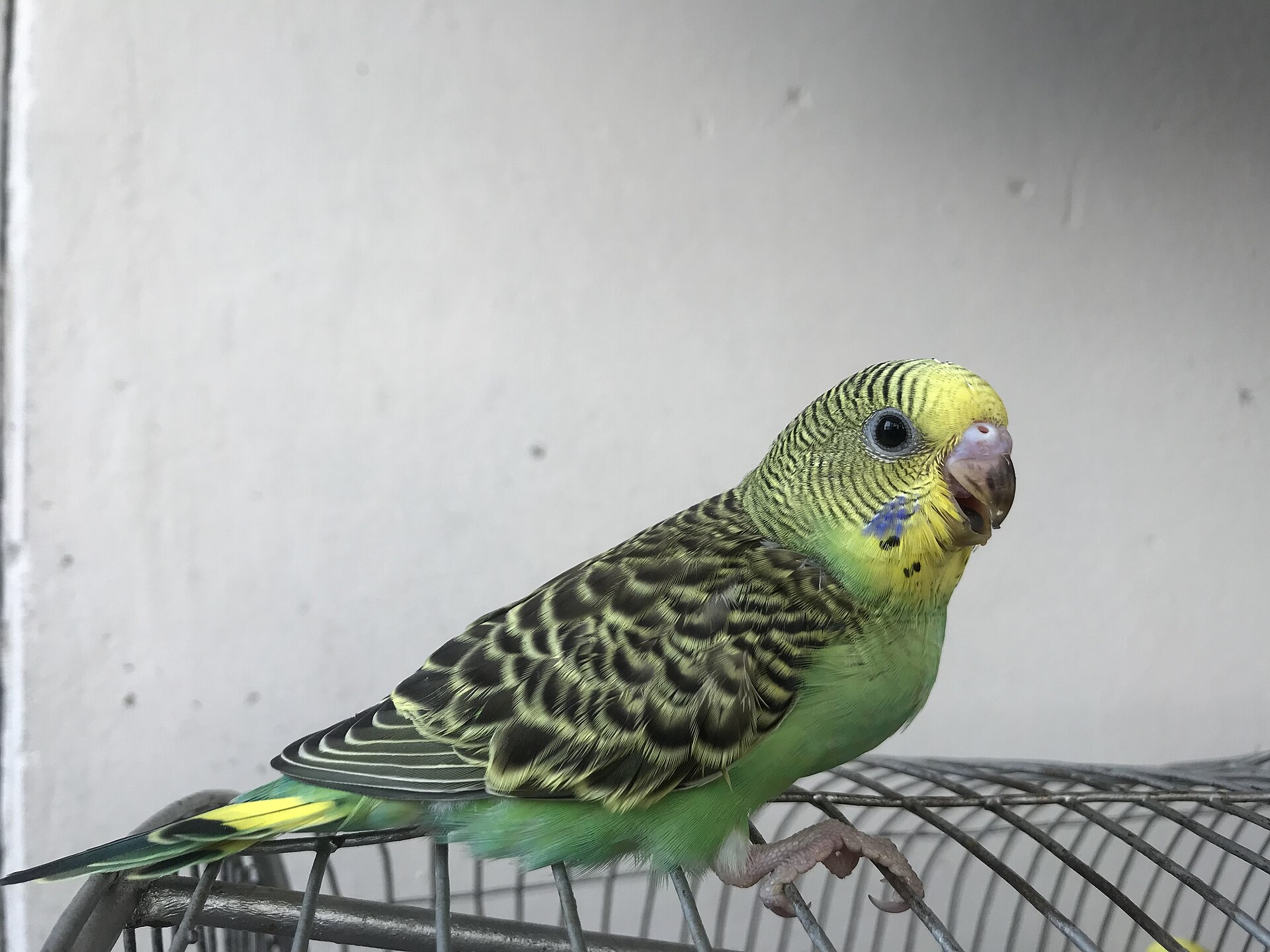
Budgerigar
Melopsittacus undulatus
A small parrot with a big vocabulary.
Pet trade

Alexandrine parakeet
Psittacula eupatria
Pet trade

Black-capped lory
Lorius lory
Pet trade

Black-cheeked lovebird
Agapornis nigrigenis
Pet trade

Blue lorikeet
Vini peruviana
Zoos & aquariums

Blue-crowned hanging parrot
Loriculus galgulus
Zoos & aquariums