
Home / Birds / Songbirds and perching birds / Red siskin
Federal restrictions applyRed siskin
Spinus cucullatus
Birds › Songbirds and perching birds (Passeriformes) › Fringillidae (Finches and canaries)
The red siskin (Spinus cucullatus) is a small endangered finch.
From Wikipedia: Red siskin, CC BY-SA 4.0 (excerpt)

Care at a glance
Species-specific values
Values researched for this exact species. Air, surface and water temperatures are listed separately, and each source is kept as published rather than averaged.
| Minimum enclosure | Provide a properly sized cage; a planted aviary also works well. Source: birdscoo.com | |
| Diet | Offer a varied seed diet, leafy greens, occasional fruit, live food, and egg and biscuit formula. Source: birdscoo.com | |
| Feeding frequency | Feed seeds and live food year-round; provide sprouted or soaked seeds regularly when available. Source: birdscoo.com | |
| Social housing | Use a breeding pair for captive breeding. Source: birdscoo.com | |
| Diet | Provide leafy greens and leafy green vegetables. Source: birdscoo.com | |
| Feeding frequency | Offer fruit occasionally. Source: birdscoo.com | |
| Diet | Offer mealworms, fly pupae, crickets, and small locusts as live food. Source: birdscoo.com | |
| Feeding frequency | Feed live food year-round and add egg and biscuit formula. Source: birdscoo.com | |
| Diet | Provide extra live food or protein during molting and breeding. Source: birdscoo.com | |
| Diet | Supplement vitamins via the water supply. Source: birdscoo.com | |
| Diet | Provide a high-quality grit mix including shell, baked egg shell, charcoal, crushed cuttlebone, and limestone. Source: birdscoo.com |
Warnings
Understanding the animal
In the wild
In the wild
| Overview | The red siskin (Spinus cucullatus) is a small endangered finch. — From Wikipedia: Red siskin, CC BY-SA 4.0 (excerpt) |
| Where it lives | It is native to tropical South America - in northern Colombia, northern Venezuela (where it is called the "cardenalito") and Guyana. It was common in the early 20th century, occurring throughout the foothills of northern Venezuela, but has now become extremely rare in a fragmented range. The population on Trinidad is believed to be extirpated, with no sightings since 1960. — From Wikipedia: Red siskin, CC BY-SA 4.0 (excerpt) |
| Behavior | The red siskin is found in open country, forest edges and grassland with trees or shrubs. The female is believed to lay three greenish-white eggs in a grassy cup nest in a tree. Red siskins eat seeds and are highly gregarious. — From Wikipedia: Red siskin, CC BY-SA 4.0 (excerpt) |
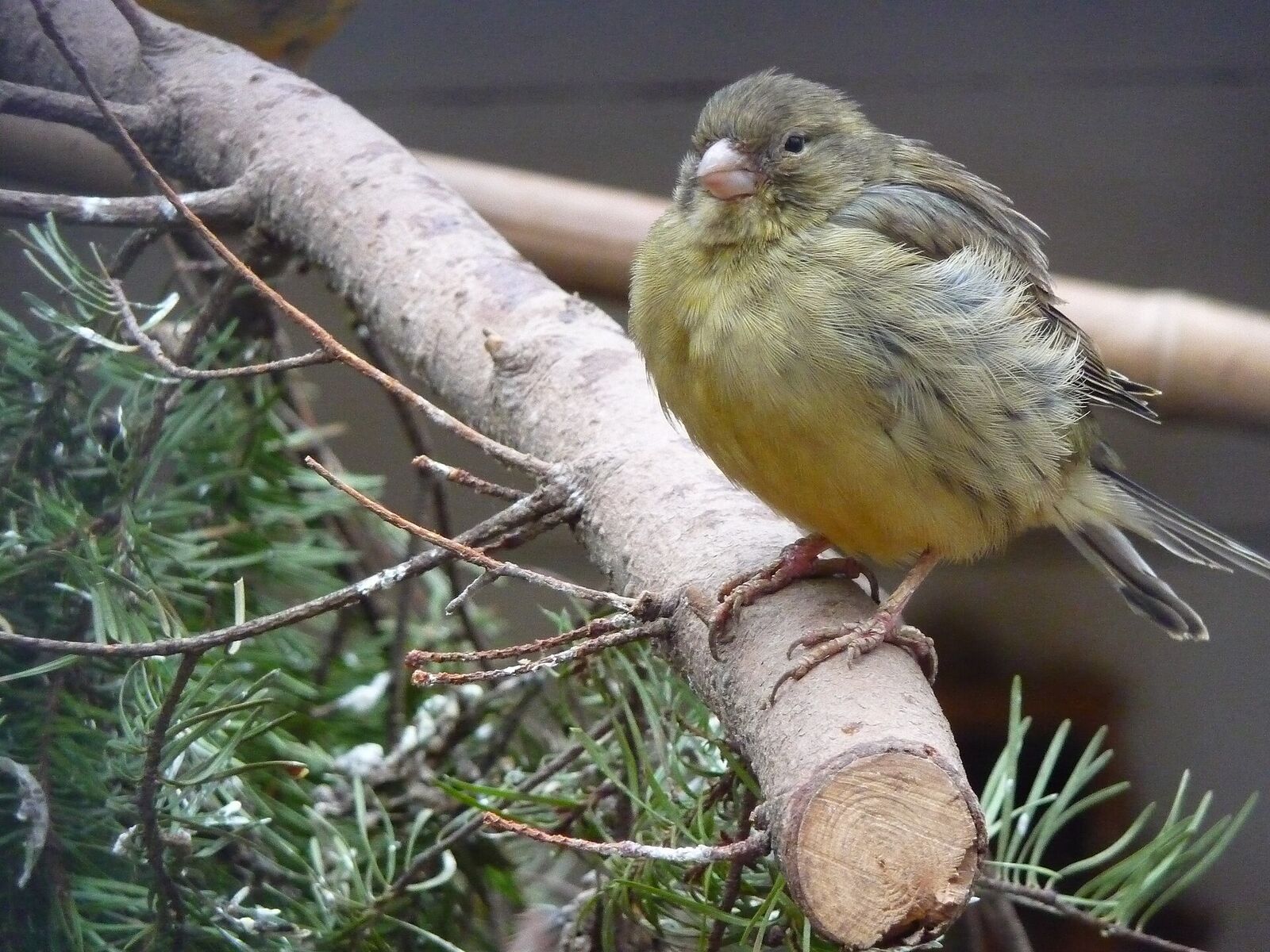
| Appearance and size | The red siskin is about 10 cm long. The male is mainly deep red, with black on the head, throat, flight feathers and tail tip, and a whitish lower belly and under tail. The female is grey on the head, breast, and upper parts, apart from a red rump and upper tail. — From Wikipedia: Red siskin, CC BY-SA 4.0 (excerpt) |
| Conservation | This siskin has been illegally trapped for the cage bird trade and endangered by environmental factors. Domestication has probably been responsible for the continuation of the species, which might otherwise be extinct. — From Wikipedia: Red siskin, CC BY-SA 4.0 (excerpt) |
Native climate (measured)
Native climate (measured)
| Warm-season highs | about 92°F (up to 94°F in the hottest sampled areas) |
| Cool-season lows | about 70°F (down to 64°F in the coldest sampled areas) |
| Average temperature | 75–82°F across sampled records |
| Relative humidity | 74–77% on average (driest month about 67%) |
| Rainfall | about 1532 mm a year |
Measured at 11 wild occurrence records sampled against WorldClim 2.1 climate data (1970–2000 averages). Air conditions in the range are ecological context, not enclosure settings: microhabitats such as burrows, leaf litter or basking rocks can be cooler, warmer or more humid.
Sources for this sheet
- Species+ (UNEP-WCMC and the CITES Secretariat) Zoo, university or veterinaryThe official database of species listed under CITES. UNEP (2026). The Species+ Website. Nairobi, Kenya. Compiled by UNEP-WCMC, Cambridge, UK. Available at: www.speciesplus.net. [Accessed 04/10/2026].
- USFWS International Affairs: CITES Zoo, university or veterinaryFederal agency that issues CITES permits.
- 9 CFR 2.1: Animal Welfare Act licensing (USDA) Zoo, university or veterinaryWho needs a USDA license to breed, sell or exhibit animals.
- GBIF Backbone Taxonomy (Global Biodiversity Information Facility) (CC BY 4.0) Peer-reviewed researchInternational scientific taxonomy used here for classification. GBIF Secretariat (2023). GBIF Backbone Taxonomy. Checklist dataset https://doi.org/10.15468/39omei, accessed via GBIF.org.
- Wikipedia (species article) (CC BY-SA 4.0) Community referenceFree encyclopedia; useful overviews with their own citations. Short excerpts are quoted under CC BY-SA 4.0, each credited with a link to its article.
- The eBird/Clements Checklist of Birds of the World (Cornell Lab of Ornithology) Peer-reviewed researchThe standard global bird checklist maintained by the Cornell Lab of Ornithology; used here for complete species lists of widely kept bird families.
- iNaturalist (captive observations) Community referenceCommunity observation platform run by the California Academy of Sciences and National Geographic; observations marked captive show animals living in homes, zoos and aquariums.
More finches and canaries
Domestic canary
Serinus canaria
Centuries of song in a small bird.
Pet trade

Black siskin
Spinus atratus
Aviary

Black-chinned siskin
Spinus barbatus
Aviary

Black-headed siskin
Spinus notatus
Aviary

Eurasian chaffinch
Fringilla coelebs
Zoos & aquariums

European goldfinch
Carduelis carduelis
Pet trade