
Home / Birds / Songbirds and perching birds / Twite
No federal permit to keepTwite
Linaria flavirostris
Birds › Songbirds and perching birds (Passeriformes) › Fringillidae (Finches and canaries)
The twite (Linaria flavirostris) is a small brown passerine bird in the finch family Fringillidae.
From Wikipedia: Twite, CC BY-SA 4.0 (excerpt)

Care at a glance
Species-specific values
Values researched for this exact species. Air, surface and water temperatures are listed separately, and each source is kept as published rather than averaged.
| Minimum enclosure | Cage dimensions are 12 x 12 x 15 inches. Source: birdscoo.com | |
| Diet | Provide a finch pellet diet, fresh greens and vegetables, egg-food, grubs, and some seeds. Source: birdscoo.com | |
| Social housing | Finches of the same size and species may be kept in flocks or pairs. Source: birdscoo.com | |
| Substrate | Layer the cage base with wood pellets, aspen shavings, a liner, or recycled paper. Source: birdscoo.com |
Understanding the animal
About this animal
About this animal
It is a partially migratory species that is found in a strongly disjunct distribution in northern Europe, and in Asian mountains from eastern Turkey to Nepal, western China and Mongolia. It mainly feeds on small seeds but occasionally also feeds on insects.
From Wikipedia: Twite, CC BY-SA 4.0 (excerpt)
In the wild
In the wild
| Overview | The twite (Linaria flavirostris) is a small brown passerine bird in the finch family Fringillidae. It is a partially migratory species that is found in a strongly disjunct distribution in northern Europe, and in Asian mountains from eastern Turkey to Nepal, western China and Mongolia. It mainly feeds on small seeds but occasionally also feeds on insects. — From Wikipedia: Twite, CC BY-SA 4.0 (excerpt) |
| Where it lives | The twite breeds in northern Europe and across the Palearctic to Siberia and China. — From Wikipedia: Twite, CC BY-SA 4.0 (excerpt) |
| Reproduction | The female builds a nest either on the ground or low down in a bush, laying 3–6 eggs. The eggs are light or dark blue in colour with variable dark purplish-brown specs or blotches which are mainly concentrated around the broad end. They are laid daily and measure 17.4 x 13.2 mm. — From Wikipedia: Twite, CC BY-SA 4.0 (excerpt) |
| Appearance and size | The twite is similar in size and shape to a linnet, at 13 to 13.5 cm long. It lacks the red head patch and breast shown by the linnet and the redpolls. It is brown streaked with black above; adult males also have a pink rump, immatures and females a brown rump. — From Wikipedia: Twite, CC BY-SA 4.0 (excerpt) |
| History and naming | In 1758 the Swedish naturalist Carl Linnaeus included the twite in the 10th edition of his Systema Naturae under the binomial name Fringilla flavirostris. The twite and the closely related linnets were at one time placed in the genus Carduelis but were moved to the resurrected genus Linaria based on a phylogenetic analysis of mitochondrial and nuclear DNA sequences that was published in 2012. — From Wikipedia: Twite, CC BY-SA 4.0 (excerpt) |
Native climate (measured)
Native climate (measured)
| Warm-season highs | about 68°F (up to 74°F in the hottest sampled areas) |
| Cool-season lows | about 22°F (down to 6°F in the coldest sampled areas) |
| Average temperature | 31–49°F across sampled records |
| Relative humidity | 78–82% on average (driest month about 69%) |
| Rainfall | about 697 mm a year, spread fairly evenly |
| Winters | Cool to cold winters (lows around 22°F) in much of its native range. Seasonal slowdown may be relevant, but species-specific biology determines whether brumation or hibernation occurs. |
Measured at 2379 wild occurrence records sampled against WorldClim 2.1 climate data (1970–2000 averages). Air conditions in the range are ecological context, not enclosure settings: microhabitats such as burrows, leaf litter or basking rocks can be cooler, warmer or more humid.
Profile
Profile
Researched for this exact species. Sources are listed under In the wild above.
History
In 1758 the Swedish naturalist Carl Linnaeus included the twite in the 10th edition of his Systema Naturae under the binomial name Fringilla flavirostris. The twite and the closely related linnets were at one time placed in the genus Carduelis but were moved to the resurrected genus Linaria based on a phylogenetic analysis of mitochondrial and nuclear DNA sequences that was published in 2012.
From Wikipedia: Twite, CC BY-SA 4.0 (excerpt)
Data and studies
The numbers
The numbers
Each bar is what one source reports. Where several sources weigh in, the dashed gold band marks their average.
Maximum recorded lifespan
Longest recorded lifespan reported by each database; typical lifespans are usually shorter.
Typical adult weight
Average adult body mass in each database (FishBase gives the maximum recorded weight).
Incubation
Female maturity
Sources for this sheet
- AnAge: The Animal Ageing and Longevity Database (Human Ageing Genomic Resources) (CC BY 3.0) Peer-reviewed researchCurated, referenced longevity and life-history records for thousands of species; maximum lifespans are often from zoo animals.
- Myhrvold et al. (2015). An amniote life-history database. Ecology 96: 3109 Peer-reviewed researchPeer-reviewed compilation of life-history data for over 21,000 birds, mammals and reptiles.
- 9 CFR 2.1: Animal Welfare Act licensing (USDA) Zoo, university or veterinaryWho needs a USDA license to breed, sell or exhibit animals.
- GBIF Backbone Taxonomy (Global Biodiversity Information Facility) (CC BY 4.0) Peer-reviewed researchInternational scientific taxonomy used here for classification. GBIF Secretariat (2023). GBIF Backbone Taxonomy. Checklist dataset https://doi.org/10.15468/39omei, accessed via GBIF.org.
- Wikipedia (species article) (CC BY-SA 4.0) Community referenceFree encyclopedia; useful overviews with their own citations. Short excerpts are quoted under CC BY-SA 4.0, each credited with a link to its article.
- The eBird/Clements Checklist of Birds of the World (Cornell Lab of Ornithology) Peer-reviewed researchThe standard global bird checklist maintained by the Cornell Lab of Ornithology; used here for complete species lists of widely kept bird families.
More finches and canaries
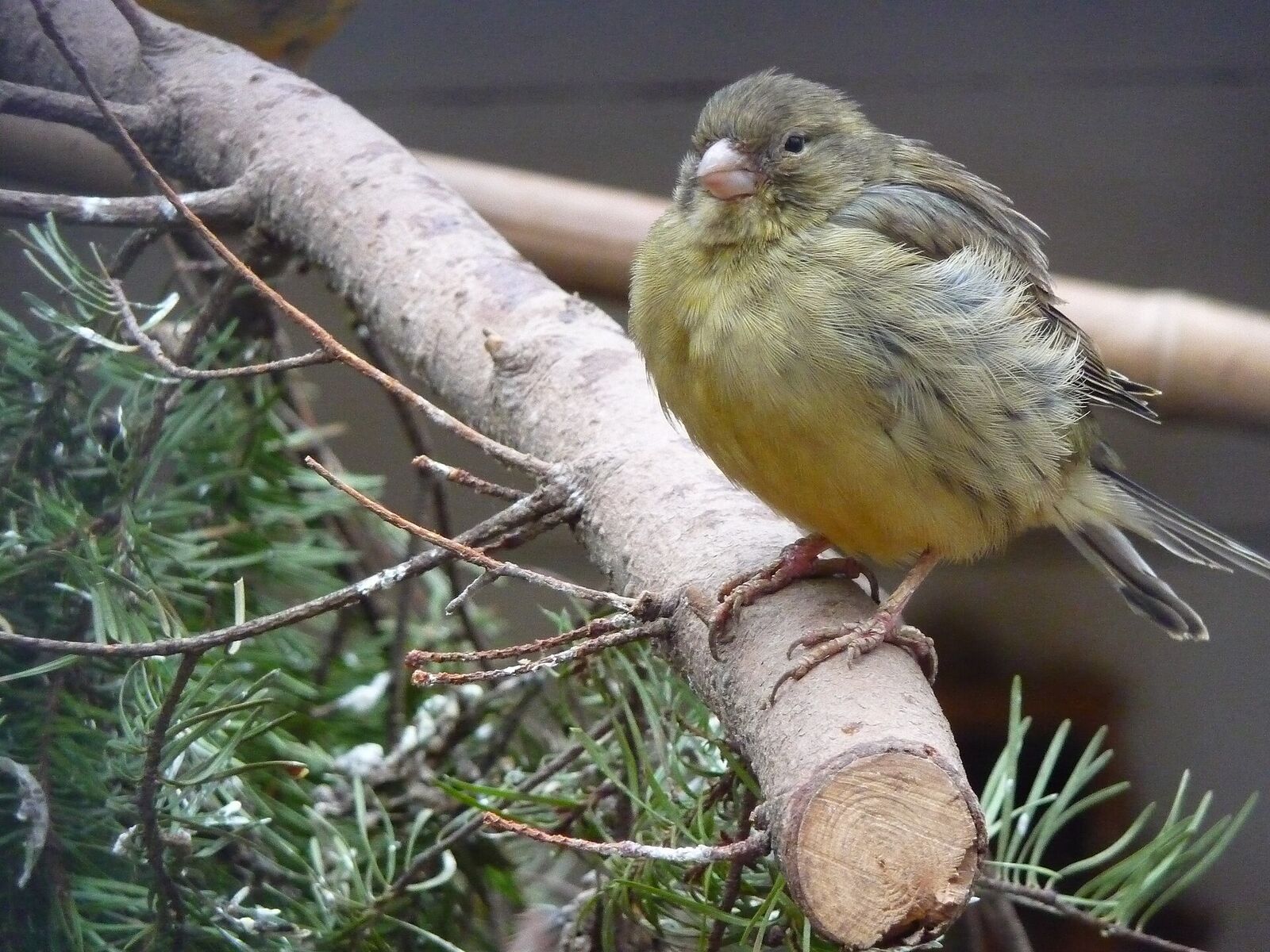
Domestic canary
Serinus canaria
Centuries of song in a small bird.
Pet trade

Black siskin
Spinus atratus
Aviary

Black-chinned siskin
Spinus barbatus
Aviary

Black-headed siskin
Spinus notatus
Aviary

Eurasian chaffinch
Fringilla coelebs
Zoos & aquariums

European goldfinch
Carduelis carduelis
Pet trade