
Home / Invertebrates / Ants and bees / Silky ant
No federal permit to keepSilky ant
Formica fusca
Invertebrates › Ants and bees (Hymenoptera) › Formicidae (Ants)
Experience: Easy

FamilyAnts
Kept byPet trade
Care at a glance
Species-specific values
Values researched for this exact species. Air, surface and water temperatures are listed separately, and each source is kept as published rather than averaged.
| Warm side air temperature | 64–79 °F (18–26 °C) Source: formicamarket.com | |
| Humidity | 50–70 % Source: formicamarket.com | |
| Night temperature | 41 °F (5 °C) Source: formicamarket.com | |
| Substrate | A soil-based or ytong nest with deep digging medium; sand-clay or loam substrate. Source: formicamarket.com | |
| Diet | Offer small insects for protein, honey or sugar water for sugars, and provide clean water. Source: formicamarket.com | |
| Feeding frequency | Protein two or three times weekly for a young colony, increasing to daily when brood is plentiful; founding queen gets food every other day. Source: formicamarket.com |
Understanding the animal
In the wild
In the wild
| Overview | Formica fusca is a black-colored ant commonly found throughout Europe as well as parts of southern Asia and Africa. It has the common names silky ant or dusky ant. The range within the palaearctic region extends from Portugal in the west to Japan in the east and from Italy in the south to Fennoscandia in the north. Populations from North America have been split off as a separate species, Formica subaenescens. — From Wikipedia: Formica fusca, CC BY-SA 4.0 (excerpt) |
| Where it lives | F. fusca feeds on small insects such as codling moth larvae, aphid honeydew and extrafloral nectaries. Workers have been found to have a very high resistance to some pathogens and it is thought this may be due to F. fusca utilising the antibiotic properties of their formic acid, additional to the use of their metapleural gland. — From Wikipedia: Formica fusca, CC BY-SA 4.0 (excerpt) |
| Social life and communication | Colonies are facultatively polygynous (though weakly so, with a mean number of queen of 3.09); though the queens coexist amicably, contribution to the brood tends to be unequal. Nests are usually small, containing 500–2,000 workers. The workers are large, at 8–10 mm long, and fast moving, though timid. — From Wikipedia: Formica fusca, CC BY-SA 4.0 (excerpt) |
Sources for this sheet
- GBIF Backbone Taxonomy (Global Biodiversity Information Facility) (CC BY 4.0) Peer-reviewed researchInternational scientific taxonomy used here for classification. GBIF Secretariat (2023). GBIF Backbone Taxonomy. Checklist dataset https://doi.org/10.15468/39omei, accessed via GBIF.org.
- iNaturalist (captive observations) Community referenceCommunity observation platform run by the California Academy of Sciences and National Geographic; observations marked captive show animals living in homes, zoos and aquariums.
More ants

No federal permit
Black garden ant
Lasius niger
Pet trade
Easy
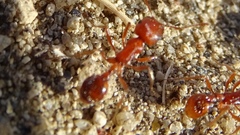
No federal permit
California harvester ant
Pogonomyrmex californicus
Pet trade
Easy

No federal permit
Florida carpenter ant
Camponotus floridanus
Pet trade
Easy
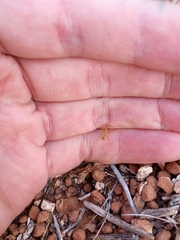
No federal permit
Honeypot ant
Myrmecocystus mexicanus
Pet trade
Easy

No federal permit
Leafcutter ant
Atta cephalotes
Pet trade
Easy

No federal permit
Mediterranean harvester ant
Messor barbarus
Pet trade
Easy